The Reincarnation Case of K.G.J. Weerasinghe | Indika Guneratne: How a Baby Elephant Helped Solve a Past Life Investigation

How Derived: Past Life Memories in Childhood

Researchers: Ian Stevenson, MD and Francis Story

From: Cases of the Reincarnation Type, Volume II, Ten Cases in Sri Lanka, by Ian Stevenson, MD 

Article by: Walter Semkiw, MD

The Life and Death of K.G.J. Weerasinghe

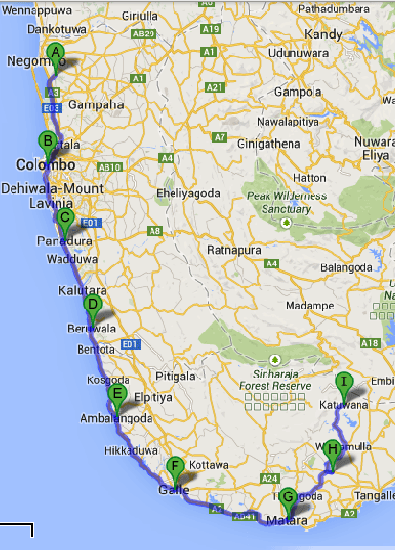
Weerasinghe was born in 1888 in village of Wehelgoda, which is 2 miles east of Matara, a city located on the southern tip of the Sri Lankan coast. Matara, at the time, had a population of about 75,000 people and is located 200 kilometers or 125 miles from the capital city of Colombo.

Weerasinghe had only four or five years of schooling but was obvously very intelligent, as he built up a large and successful businesses as a lumber merchant and building contractor. After saving his money, he eventually became the wealthiest citizen of Matara, employing some of his family members. He also had servants, one of whom had the name Premadasa.  Weerasinghe had a safe or money-box where he kept cash and valuables. He also owned a gun, which he used for hunting. His home was burglarized once, which is another reason Weerasinghe possessed a gun.

Weerasinghe’s Love of Elephants
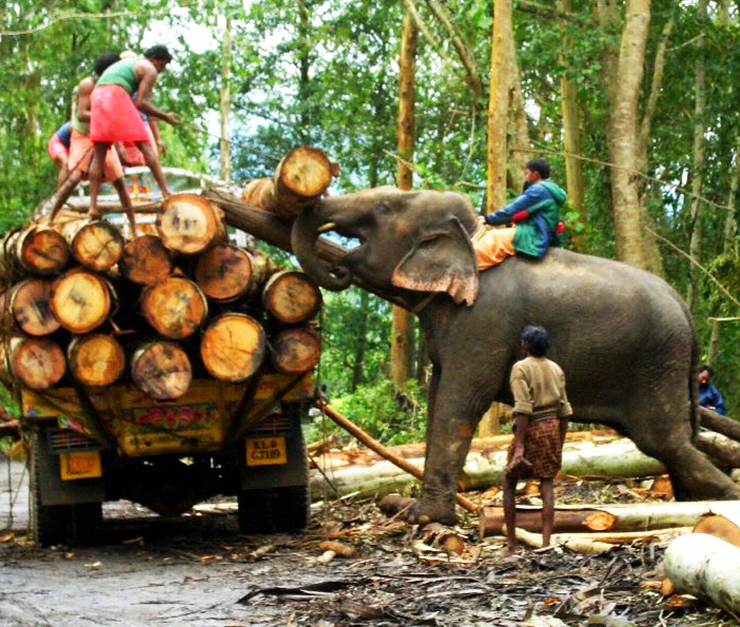
Weerasinghe owned several houses and estates in the country, where he kept cattle and elephants. Elephants worked in hauling lumber. He also had elephants at his home compound in Matara, which was located near railroad tracks.

Weerasinghe had a great fondness for these giant beasts and he instructed that on weekends, the elephants were not to be put to work until he arrived in the morning to feed and play with them. The elephants, including a baby pachyderm, would squirt water at their owner, which delighted Weerasinghe,

Owning elephants in Sri Lanka can only be afforded by the very wealthy and this fact was instrumental in investigating this reincarnation case.

Generosity to Premadasa and Others

Weerasinghe, once he established his wealth, was generous and was able to give houses and whole estates to his employees, including his business manager and his servant Premadasa. He was also supportive to his nephew, his older brother’s son, and took in this nephew and his wife to live with him. The couple had a daughter named Padminie.

Weerasinghe’s “Benz”
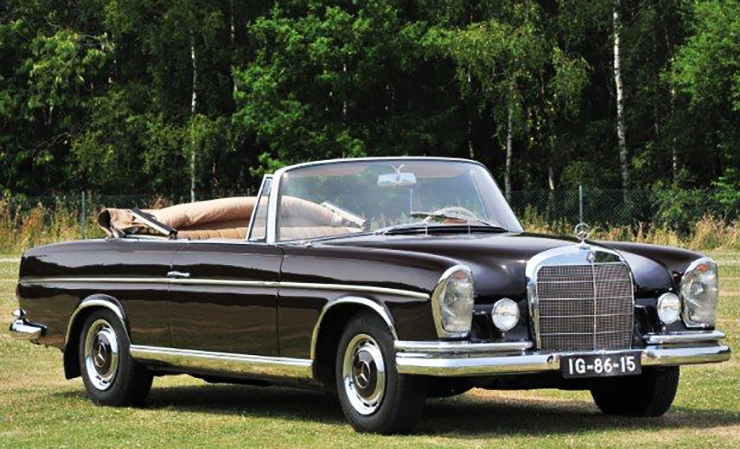
Weerasinghe liked to live on a grand scale and he regularly would buy a bigger house and a larger, more luxurious automobile. He started out with a small Austin and in 1957, he put in the paperwork to purchase a prestigious Mercedes Benz vehicle, but he backed out at the last minute when the price suddenly rose. He also had Ford and Chevrolet trucks, which were used for his lumber business. Weerasinghe liked to boast about his accomplishments and possessions. He indeed had become what in Sri Lanka is known as a “mudalali,” which refers to an aggressive, action-oriented and successful businessman.

A redeeming quality was his kindness to Buddhist monks. He himself was a devout Buddhist who built several temples, rest houses for pilgrims and who donated estates to Buddhist temples. He made almost weekly trips to the holy site where the Hindu God Kataragama is worshipped by both Buddhists and Hindus. Each year thousands of pilgrims took the train to Matara to pray at the Kataragama temple. Weerasinghe also loved children and was generous to them.

Gambling, Drinking, Womanizing and Rage

Weerasinghe was an enthusiastic gambler and he could afford to wager large sums of money. He also widely participated in lotteries. Between 1958 to 1959 he won nearly 100,000 Rupees at cards, which was an enormous sum. He was so skilled at cards that professional gamblers refused to play with him.

He enjoyed alcohol and was a heavy drinker for many years, though after 1945, he reduced his consumption. Still, he drank alcohol every night with friends, consuming whiskey and arrack.  In addition, he chased woman when it pleased him.

Weerasinghe had a temper, though his rages were short-lived. Still, many feared him. He threatened to beat his servants when they disappointed him, though he never did so. Once, he had an argument with someone who was gambling with him and Weerasinghe severely beat this man. In revenge, this individual threatened to shoot Weerasinghe, though friends dissuaded this course of action.

Marriage, Adoption and Demise

Weerasinghe married B.E. Abeynayake, but it turned out to be a difficult union. She objected to his gambling, drinking and womanizing, which resulted in frequent arguments. Due to their conflicts, Weerasinghe forbade her family members to enter their home.
In 1960, he decided to separate from his wife and he sent her away. Weerasinghe’s brother later helped the couple reconcile and she returned to the family’s home in Matara. The couple had no children, so Weerasinghe formally adopted Padminie as his daughter, thus assuring her financial security for the future.

Weerasinghe had diabetes and had to be hospitalized several times for this condition. In December 1960 he complained of pain in his toe and he had his servant, Premadasa, drive him to Colombo where he was admitted into the central hospital. There he developed urinary retention and deteriorated rapidly. He died on December 18, 1960 at the age of 72. Those present at his bedside when he passed included his older brother and Premadasa. Padminie, who was 11 years of age at the time, was not present when her adoptive father died.

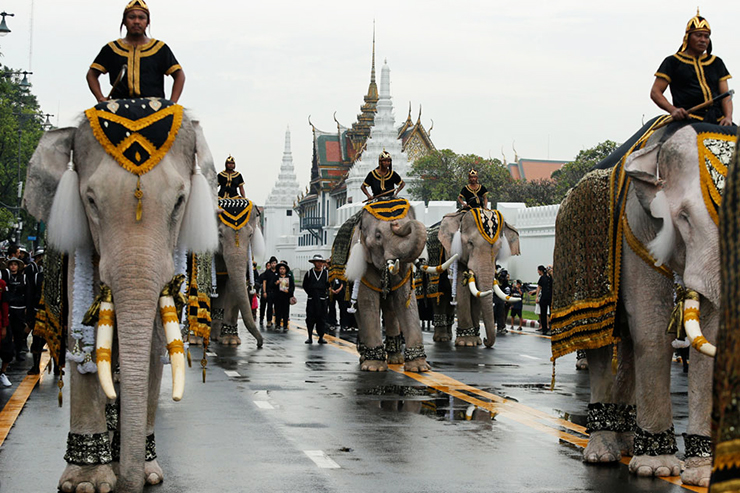
He had a large funeral with four adult elephants in attendance, dressed in white, which was Weerasinghe’s favorite color, as well as the color of mourning in Sri Lanka.

Weerasinghe Reincarnates 18 Miles from his Place of Death

Indika Guneratne was born on July 26, 1962, less than two years after Weerasinghe died. His father, a farmer, was G.D. Guneratne and his mother’s name was S.D. Harriet. The family lived deep in a jungle that featured rubber plantations in an area called Korale Ima, which is 30 kilometers or 18 miles from Colombo. The family lived in a small house on a rubber plantation.

When Indika was a little over three years of age, he started to talk about a previous life and claimed that he had lived in Matara. In comparison to the modest circumstances of his parents, Indika said that he had been wealthy, had a much larger and more beautiful house than his current home and that he owned elephants.

He complained that the Guneratne home did not have electricity, in contrast to his past life home where he could turn on lights by moving something on the wall, presumably a switch. He noted these lights did not leak, in contrast to the kerosene lamps that the Guneratne family used. He also commented on the paucity of meat and the poor quality of the fish at their dinner table, as well as the shabbiness of his mother’s clothing.

Past Life “Benz,” Telephone, Bundles of Money, Railroad Tracks and a Servant Named Premadasa

In addition, Indika said that in his past life he owned a car and trucks. He specified that his car was a “Benz.” Indika, as a child, had an avid interest in automobiles and noted differences between his past life cars and those he inspected around their village.

He also said that he had a telephone at his past life home, an item not possessed by the Guneratne family. Indika even demonstrated how he used it by putting his hand near his mouth and saying “Hello,” which is a word commonly used in Sri Lanka when answering the phone. This, indeed, was the word that Weeasinghe had used when answering a phone call.

Indika told his parents that he had “bundles of money” and that if they took him to Marata, “then I can give you the money.” When something angered Indika, he would threaten to go to Matara. Indika also shared that he had a servant named Premadasa.

In referring to the location of his past life home, he related that it was near the railroad tracks in Matara. His parents were astonished that he used the words “railroad tracks” as at his young age, Indika had never seen a railroad train or tracks and his parents didn’t believe that anyone around him had ever used these words. He also related that there had been a burglary at his past life home.

Past Life Habits

Indica shared that he had taken alcohol in his previous life and that his past life wife had objected to this habit. His father asked how he would ask for a drink. To this question Indika replied, “arraku bagayuk,” which is a phrase used in Sri Lanka meaning “pour me a small drink of arrack.” It was noted that this was a very unusual phrase for a young child to know.

On Sundays he would say: “I must go to Colombo to buy saris for my wife and clothing for my children.”  When his mother asked him if he knew how to buy saris he said that he knew. Later it was confirmed that Weerasinghe indeed would go to Colombo on Sundays to shop for saris his wife and clothing for other family members.

Indika Relives Elephant and Other Past Life Memories
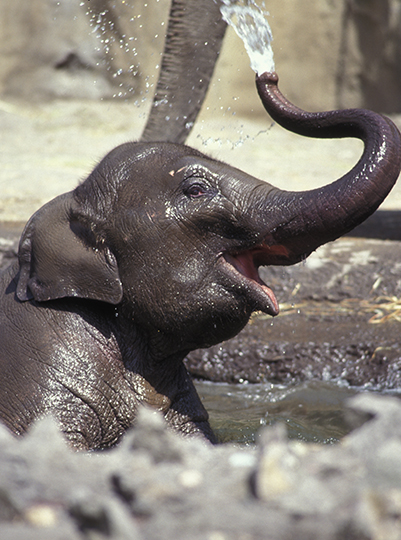
Indika would describe with glee how in his past life he played with his elephants, including how his baby elephant would squirt water on him. It was as if Indika was reliving these moments and his father observed that: “Though his body appears to be here, his mind appears to be there,” meaning in his previous life at Matara.

There were also other times when Indika seemed to forget where he was and act as if he was actually in Matara. During these episodes, he would say:

“Where is my money-box?”

“Where is my gun?”

Indika said that he had a child in his previous life, apparently referring to his adopted daughter Padminie. When asked how old his child was, Indika stretched his hand as high as he could, indicating that she was that tall. Recall that Padminie was eleven years old when Weerasinghe died.

When Indika incurred an injury to his lip, he told his mother to inform “his wife.” When she asked how to find his wife, Indika replied he would go to Colombo and then to Matara. He noted that his car would be there. He would ask for his past life wife at other times when he did not feel well.

When asked by his parents how he came to live with them, Indika related that he had an argument with his wife and then came to his new home.

Ian Stevenson, MD Investigates this Reincarnation Case

Based on this information, Indika’s father make inquires of friends who had lived in Matara or who knew people in that city. He learned that there was an individual in Matara who fit the description that Indika gave and that this person’s family name was Weerasinghe. Indika’s family did nothing further to try to locate or contact the Weerasinghe family.

Indica stop talking about his previous life at the end of 1966, when he was about 4 ½ years old.

About two years later, in January 1968, Ian Stevenson, MD first learned about Indika’s past life memories when he received a letter regarding the case written by V. F. Guneratne, an apparent relative of Indika’s family. Stevenson traveled with his colleague, Francis Story, to meet Indika and his family in March 1968.

After meeting with the Guneratne family in Korale Ima and compiling the statements made by Indikka regarding his previous life, Stevenson, Francis Story, Indika and Indika’s father traveled the 100 miles or so from Korale Ima to Matara to further research the case. Though an acquaintance of Indika’s father indicated that a Matara businessman named Weerasinghe matched the description of Indika’s past memories, Stevenson wanted to see if other businessmen in Matara could be candidates for Indika’s past life persona.

A Search for Wealthy Businessmen with Elephants

The key clue was a wealthy businessman who owned elephants. Stevenson’s investigation revealed only two other deceased businessmen who owned elephants in Matara. Stevenson concluded that Indika’s statements did not correlate to these two individuals and it was concluded that Indika’s past life identity must have been that of Weerasinghe.

The group then made their way to the home of the Weerasinghe family. Stevenson beforehand ascertained that Indika’s family and the Weerasinghe family had no prior contact and indeed, when the two families met, Stevenson’s impression was that both families acted as if they were encountering each other for the first time. Stevenson concluded that Indika could not have known the details of Weerasinghe’s life by normal means.

Indika, though, did not make any concrete identifications at the Weerasinghe home. Stevenson attributed this to the fact that Indika, now about six years of age, had stopped talking about his past life almost 2 years beforehand.  In the series of 1200 validated childhood past life memory cases studied by Ian Stevenson at the University of Virginia, the child, on average, loses memories of the past life at 7.5 years of age.  Stevenson concluded that Indika was not able to make identifications of past life relatives in Matara simply because it was too late, that Indika had lost access to memories of his life as Weerasinghe.

Past Life Personality Traits Persist
Ian Stevenson noted there were many similarities in the personalities of Weerasinghe and Indika. Both had:

The favorite color of white

A fear of burglars

A tendency to save money

Great fondness of elephants and an interest in cattle

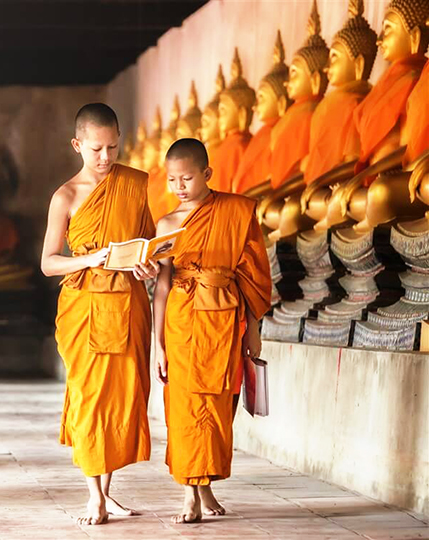
Respect for Buddhist monks

A fondness for meat and high-quality fish

An avid interest in motor vehicles

A tendency to be boastful and bragging

A hot temper

A fondness for dogs and dislike of cats

Ian Stevenson visited the Guneratne family again in 1973, when Indika was 11 years old. Though he had stopped talking about his past life when he was four and a half years old, Indika still displayed the behaviors of his past life persona. He continued to demand high quality food and clothes, had an avid interest in elephants, lottery tickets and automobiles, which he would try to start, and he still had a quick temper. When Stevenson asked Indika wanted to become when he grew up, he replied, surprising no one, a “mudalali,” that is, his past life profession as an aggressive, successful businessman.

Principles of Reincarnation-Understanding Past Lives

Past Life Talents and Behavior: Indika had the same personality traits and interests as Weerasinghe, including a tendency to save money to accumulate wealth.

Relationships Renewed through Reincarnation: Indika was able to meet his past life family.

Source: Stevenson, Ian: Cases of the Reincarnation Type, Volume II, Ten Cases in Sri Lanka, pages 203-234

This case is part of the Walter Semkiw Memorial Archive

Now maintained by the Institute for Life Continuity Studies (ILCS), a 501(c)(3) nonprofit. For evidence-labeled research, modern analysis tools, and community discussion, visit our home site.

Reincarnation.info ·
Our Methodology ·
Interactive Case Map ·
Support This Work

Reincarnation Case of Lugdi Chaubey | Shanti Devi Mathur and the Orb Phenomenon

🕯️

Part of Our Reigniting Reincarnation Work

This case involves the work of Kevin Ryerson and Ahtun Re, who continue their research today through the Institute for Life Continuity Studies (ILCS). Walter Semkiw’s legacy lives on.

Reincarnation.info →

How Derived: Past Life Memories in Childhood

Researchers: Committee of Inquiry convened by Mahatma Gandhi

From: I Have Lived Before: The True Story of the Reincarnation of Shanti Devi by Sture Lonnerstrand

Article by: Walter Semkiw, MD

The Life and Death of Lugdi Devi

Lugdi Devi, which means “heavenly doll,” was born on January 18, 1902 in the town of Mathura, also known by locals as Muttra, which is located about 15 miles south of New Delhi. Her father’s name was Chaturbhuj and her mother’s name was Jagti Devi.

Lugdi was a very devout girl who worshiped the Hindu god Krishna. Muttra is considered the home city of Krishna and the Dvarkadish Temple there was built in Krishna’s honor.

When she was old enough to wed, her father, Chaturbhuj , who was poor, went into debt to provide a dowry substantial enough for her to marry a wealthy citizen, Kedar Nath Chaubey. Kedar was a Brahmin, a member of the highest caste in India.

Lugdi and Kedar were married during the Navaratri festival in Muttra. Kedar had a cousin named Kanji Mal Chaubey, who lived with the couple.

Lugdi became pregnant. She had a difficult pregnancy and had much pain during the period of gestation. On September 25, 1925, she bore a son who the couple named Naunita Lal Chaubey. There were complications to the pregnancy and on October 4, 1925, Lugdi died.

Ludgi Reincarnates as Shanti Devi Mathur

Fourteen months later after Lugdi died, a girl was born in New Delhi. Her mother’s was Prem Pyari Mathur and her father was Rang Bahadur Mathur. The couple named their daughter Shanti Devi Mathur.

After her fourth birthday, Shanti started to talk about a past life husband. She said: “I am a Brahmin wife from Muttra.” She related that her husband was waiting for her in Muttra.

Like in many childhood past life memory cases, she told her parents that this was not her real home. She added that the clothes that she was wearing were not her real clothes.

In addition, Shanti told Prem that “you are not my real mama” and that “you don’t look like her.” Though her family was not vegetarian, she told her parents that “in Muttra we don’t eat meat.” She said that it was not right to kill animals. She said that she wanted “sattvic” food. Her parents had no idea how she knew that word, as they never used it. Sattvic foods are obtained without harming an organism and as such, are vegetarian foods. Only Sattvic foods are acceptable as offerings to Hindu gods.

Shanti had friends who were twins, named Prabhash and Subhash. Their father was a prosperous attorney, Tara Chand Mathur. When Shanti was with the twins she drew a picture of a temple. Prabhash noted it did not look like the temple in their neighborhood. Shanti replied that she drew the Dvarkadish Temple in Muttra. She added that her husband has a large store in near this temple.

Shanti Reveals Her Past Life Address

Shanti related that she danced for her husband while wearing ankle bracelets, which are called chureys. She said that they lived on a street named after her husband’s family, specifically, the ninth house on Chaubey Street in Muttra. She also stated that her name was not Shanti Devi, but Lugdi Devi. When she was eight years of age, Shanti revealed that her past life husband’s name was Kedar Nath. She related that in her past life, her father’s name was Chaturbhuj and her mother’s name was Jagti.

With this address, 9 Chaubey Street, the past life name of Lugdi Devi Chaubey and the past life husband’s name of Kedar Nath Chaubey, there arose a way to research Shanti’s claimed past life.

The headmaster of the school that Shanti attended, whose name was Lala Kishan Chand, and a teacher, Bishan Chand, heard about her claims of having a husband in Muttra. They concluded that Shanti’s statements referred to a past lifetime. Lala Kishan Chand  took the initiative to write a letter to Kedar Nath Chaubey at 9 Chaubey Street in Mattra regarding this hypothesis.

Shanti’s Past Life Husband sends an Envoy

The headmaster was rewarded by receiving a reply from Kedar that he indeed had a wife named Lugdi Devi and that he has a store near the Dvarkadish temple, as Shanti had reported. Kedar related that he has a cousin in New Delhi whose name is Kanji Mal Chaubey, who he has written to asking that Kanji to meet this girl who claims to be his reincarnated wife.

When Shanti was still eight years old, Kanji Mal Chaubey went to meet her at her home in New Delhi. As soon as he entered their house, Shanti stated: “You are my husband’s cousin.”

Shanti added that Kedar is her husband and that he is a businessman in Muttra. She told Kanji that he lived with us when I was Lugdi Devi. You had difficulty trying to find a home you liked and that is why you wanted to stay with us. I remember more and more now. You didn’t want to work for Kedar because you wanted to be independent. All this was true.

Kanji then asked, how many brothers did your husband have. Shanti then replied that her husband only has one brother, which was true. Kanji then asked whether the brother was older or younger than Kedar. Shanti replied older, which was accurate.

Shanti then said she remembered his name, Kanji Mal Chaubey, which was correct.  Kanji then related that he came to meet Shanti as a skeptic, but that he was now a believer. He wrote to his cousin, Kedar, to come visit this girl.

Shanti’s Past Life Husband Arrives with a Disguise

Kedar did travel from Muttra to New Delhi to meet Shanti, but to test her, he decided to go in a disguise. When he appeared at the Mathur home, he introduced himself as Ram Chaubey, the brother-in-law of Kedar.

ReincarnationResearchPregnantShanti, though, recognized him and said that he is Kedar Nath Chaubey. After that, a boy entered the house. Shanti knew that he was her son from her past lifetime. She related that this is my son, my beloved Naunita Lal. After a moment of confusion and rejection of Shanti, Naunita returned and they embraced.

Shanti then asked whether Kedar kept his promise to her. Kedar asked what he had promised. Shanti responded: “On my deathbed you promised me you would never get married again.” Kedar confessed that he was not able to keep this vow.

Shanti Recalls a Past Life Infidelity and a Special Sexual Position

Shanti then told Kedar how she remembered how he betrayed her. When she was enduring the difficult pregnancy with Naunita Lal, she observed that the nurse that had been hired to take care of her as Lugdi had a romance with her husband, Kedar. Though she had a bone splinter in her foot, which made it difficult to walk, she managed to make her way from her room to where she saw Kedar and the nurse embracing each other in another room.

Kedar was astonished that Shanti knew of this occurrence and asked Shanti for forgiveness. Kedar, in shame, acknowledged that this was all true.

Shanti them revealed that she remembered that when she was pregnant and great pain, Kedar still wanted to have sex with her. Shanti related that due to discomfort, she could only have intercourse in a particular position and that Kedar almost forced himself on her. Kedar, in embarrassment, recoiled and asked: “How do you know about that?” After she revealed her memories of the nurse and the special sex position, Kedar again asked for Shanti’s forgiveness.

Mahatma Gandhi Convenes a Panel to Research the Shanti Devi Reincarnation Case

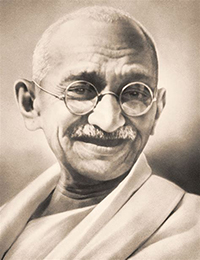
Mahatma Gandhi heard about the past life case involving Shanti Devi Mathur and went to visit her in New Delhi. It was an extraordinary event when Gandhi came to the home of the Mathur family. Gandhi encouraged Shanti to travel to Muttra with an esteemed panel of men, including the attorney, Tara Chad Mathur, to investigate this reincarnation case.

Shanti Spontaneously Recognizes Past Life Relatives in Muttra

On November 25, 1935, a party of 15 people from New Delhi traveled with Shanti, who was still eight years old, to Muttra. At the train platform in Muttra, Shanti recognized an older man, ran to him and placed her arms around his legs. She told the party that his man was her brother-in-law when she was Lugdi. She asked the man if he had taken care of her holy basil plant, as he had promised. The man related that is name was Ram Chaubey, that she was Lugdi’s brother-in-law and that he indeed promised to take care of Lugdi’s plant before she died.

Shanti then started to lead the group to her past life home. The group waved down several taxis and as the caravan made its way, Shanti had her cab driver stop near a narrow street with trees, indicating that they could walk from this point. Shanti explains that they were going to the first home that Lugdi and Kedar lived in when they were newly married.

On the way, Shanti recognized another elderly man, ran to him and kissed his hands. She explained to the group that this is her past life father-in-law, Mahadev Chaubey. She said to him: “It was you, babu Mahadev, who gave me my chureys, my ankle bracelets. Do you remember? You said: ‘She shall dance in Krishna’s honor, she is as agile as a gopi, one of those pure girls who love God.’ You appreciated my dancing.”

Mahadev admitted, “Those were my own words. Then you have returned, Lugdi Devi. Blessed be the Lord.”

Geographic Memory: Shanti Finds her Past Life Homes

Shanti then scurried down the road, excitedly relating that her past life home was nearby and that it is yellow. When she arrived at the house, she was disappointed to she that the house was white, not yellow. The door was open and Shanti went straight in. Inside, a man explained that he was renting this house from Kedar Nath Chaubey. When they first occupied the home, it was yellow, but they had painted the exterior white at their own cost. Shanti then showed the group where her and her husband’s rooms were and where their beds were located. The tenant related that when they initially inspected the house they did observe the layout of the couple’s rooms and that Shanti’s description was accurate.

The group now traveled on to 9 Chaubey Street, the location where Kedar and Lugdi lived at the time of Lugdi’s death. On that street, Shanti ran to a young man and stated: “It’s my brother. Nuthura Nath.” “My brother and I were so alike” She related to him: “You became angry when people thought you were like your sister, do you remember?”

The young man nodded and asked her if she knows the names of her other two brothers. Shanti corrected responded Vitala Nath and Ayodhya Nath.

When they approached 9 Chaubey Street, Shanti said: “It was here I spent the happiest time of my life, but also the most difficult. I was extremely ill.”

Kedar and his new wife, as well as Naunita Lal, Lugdi’s son, were waiting inside the house. Shanti kissed her past life son. She then went upstairs and found the room that she had occupied in prior lifetime was empty. She correctly identified where her bed had once been situated. She also revealed a secret hiding spot underneath floorboards where she had hidden money, but found that the  money was gone. Kedar explained that he used the money to pay for Lugdi’s funeral.

Like a Dalai Lama, Shanti Sorts out Which are Her Past Life Possessions

Shanti asked for her jewelry. Kedar fetched a jewelry box and Shanti proceeded to sort out what were hers, as Lugdi, and what belonged to Kedar’s new wife. She then decided to show the group the well she used in her past lifetime in the courtyard of the property. She pointed to a corner of the yard, but there was no well. Kedar reported that the well was there, but the water became contaminated and the well was boarded up.

Shanti Recognizes her Past Life Parents

The party then summoned taxis to take then to the Dvarkadish Temple. On the way, Shanti had her cab stop near a white wall and getting out, Shanti found an entrance that led to a large garden behind the wall. Shanti explained that this was her childhood home. People were in the garden having a party. Shanti ran up to an elderly woman, who turned out to be Lugdi’s mother. She exclaimed, “Mama, Mama, Jagti Devi. It’s Lugdi Devi, your daughter.”

She then saw her past life father, Chaturbhuj. Shanti told him that he was very poor and put himself into debt to provide a sufficient dowry for her to marry Kedar Nath Chaubey. Chaturbhuj confirmed that this was true. After this meeting with her past life parents, Shanti and the party continued onto the Dvarkadsih temple where the golden stature of Krishna welcomed them.

In the end, The Committee of Inquiry concluded that the reincarnation case of Lugdi Devi Chaubey | Shanti Devi Mather was a valid one, one that Mahatma Gandhi endorsed.

Shanti’s Memories of the Interval Between Death and Rebirth

Shanti Devi was interviewed by the Swedish journalist Sture Lonnerstrand, who wrote the book this article is based on. Shanti related to him that she had memories of what happened to her after her death as Lugdi Devi Chaubey. Shanti stated that she observed a doctor and a nurse examining her body to certify that she was dead. She stated that Kedar wanted to kiss her mouth but that the doctor restrained him.

She related that she was aware that her body was taken back to the house where she had lived, where it was wrapped in silk and linen, covered with flowers and carried on a bier made of bamboo cane poles. Kedar then lit the wood, so that Lugdi’s body would be cremated. At that point Shanti said that she was aware of an infinite bright light.

After that point, Shanti said that she felt free and had shrunk to a tiny size, like a particle of dust. She said that it was as if she was a germ which drifted around, yet she felt that the whole universe was inside of her. She said that all her incarnations were contained within this tiny germ.

She related that all her memories returned in a concentrated form and then she developed a great yearning to become a woman again. The experience of floating ceased when it felt that she had been affixed to something, which he later realized was a womb. She had begun her incarnation to be born as Shanti.

The Phenomenon of Spirit Being Orbs

Of interest, Shanti’s description of becoming tiny, like a germ, seems to correspond to images of spherical objects now being captured on digital cameras that are called orbs. Though some orbs are caused by dust or water droplets, not all orbs can be explained by these optical effects.

In my work with Kevin Ryerson, who channels a highly intelligent spirit being named Ahtun Re, I asked about orbs. Ahtun Re told me that true orbs are indeed representations of spirits, of what in various philosophies have been called the bindu or the permanent atom of a soul. Shanti’s description of floating as a tiny germ, conscious of interconnection with all beings, is likely what it feels like to be a spirit orb. To learn more about orbs, please go to:

The Orb Phenomenon

Principles of Reincarnation-Understanding Past Lives

Geographic Memory: Without prompting, on her first visit to Muttra, Shanti was able to lead The Committee of Inquiry to her past life childhood home, the first house she lived in with Kedar and the house she lived in at the time of her death.

Spirit Beings in Reincarnation Cases: Shanti described her experiences in the spirit world following the death of Lugdi and prior to her birth as Shanti.

Relationships Renewed through Reincarnation: Lugdi was reunited with her family through her incarnation as Shanti.


This case is part of the Walter Semkiw Memorial Archive

Now maintained by the Institute for Life Continuity Studies (ILCS), a 501(c)(3) nonprofit. For evidence-labeled research, modern analysis tools, and community discussion, visit our home site.

Reincarnation.info ·
Our Methodology ·
Interactive Case Map ·
Support This Work

A Woman is Reborn to Her Own Sister: The Reincarnation Case of Kristen Grimsson | Ditta Larusdottir with a Talking Baby Announcing Dream

Reykjavik, Iceland

How Derived: Past Life Memories in Childhood

Researchers: Ian Stevenson, MD and Erlander Haraldsson, PhD

From:  European Cases of the Reincarnation Type by Ian Stevenson, MD and I Saw a Light and Came Here by Erlendur Haraldsson, PhD and James G. Matlock, PhD

Article by: Walter Semkiw, MD

The Life and Death of Kristin Grimsson

Kristen was born on November 10, 1925. Her father was Olaf Loftsson and her mother was Elinborg Sigurdsdottir. Olaf and Elinborg had 15 children, all of whom were girls. Two of Kristen’s sisters, Margret and Gudrun, were involved in this reincarnation case. Kristen was Margret’s favorite sister. The family lived in Reykjavik, Iceland. Click on the image of Reykjavik to enlarge it.

When Kristen was 3 years old, she fell and struck the back of her head, causing a wound which bled. As a physician was not available, Olaf stopped the bleeding himself and dressed the wound.

As Kristen grew up, she developed an interest in acting, attended a drama school and performed in plays that were broadcast on the radio.

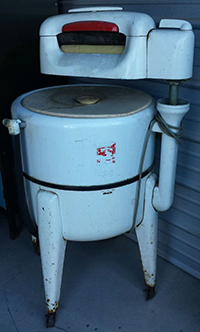
At 17 years of age, Kristen married Einar Grimsson. They lived in Reykjavik and in fall of 1947 they purchased a house, which had a basement where they placed their washing machine.

On November 6, 1947, Kristin’s sister, Soffia, was visiting the couple. Kristen went to use the wringer of the washing machine and experienced an electric shock. She told Einar about the incident and they decided not to use the machine until an electrician inspected it. Kristen stayed in the basement while Einar went to visit a neighbor.

Suddenly, Soffia, who was upstairs, heard Kristen call for her. Soffia found Kristen with her right arm affixed to the washing machine. Soffia ran to a neighbor to ask for help, who managed to turn the electricity to the house off, but when they went to the basement, Kristen had already died due to electrocution.  She was 22 years old when she passed.

Kristen is Reincarnates as the Child of her Sister, Margret

Margret, the sister of Kristen, had a daughter who was born in Reykjavik on January 3, 1967, 19 years after Kristen had died. Margret’s husband was Larus Johannson. The couple were Christians, more specifically, Lutherans. They named their daughter Ditta.

A Reincarnation Announcing Dream with a Talking Baby

ReincarnationEviidenceBabyDuring Margret’s pregnancy, her sister Gudrun, had a dream about their deceased sister, Kristin. In this dream, the following occurred:

Margret and her husband had a newborn baby, and they asked Gudran to take care of the baby while they were out. They left and Gudrun remained alone with the baby. They baby then sat up and began to talk. She said:

“Do you know that I am born again?

Gudren replied: “No, I do not know that.”

The baby then said: “Yes, I was here before…It was difficult to be born and easy to die…”

Then Gudren asked whether she looked the same?

The baby said: “Yes, but I am darker now, darker in complexion and darker hair.”

Then the baby said that she had a scar. Gudrun asked whether the this has to do with her death.

iisisreincarnationresearchbabywithoutreachedarmsThe baby replied: “No. I was over 20 when I died, but I got that scar when I was a little girl. It will go away.”

Then the baby asked about Maria, (another of the daughters of the family, who had been a babysitter for Kristen).

Gudren, upon hearing Maria’s name spoken by the baby said: “Oh, did you know us before?”

At this, the baby laid down again and said: “I do not want to talk about it anymore.”

Gudren interpreted the dream as the baby representing her sister Kristen, as she was the only one in the family who had died.

A Past Life Birthmark

When Ditta was two weeks old, Margret noticed a prominent birthmark at the back of her head above and behind her right ear. This was the same place where Kristen incurred the wound to her head in a fall. Margret and Larus divorced when Diita was a small child.

A Past Life Husband

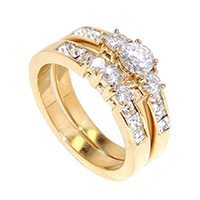
When Ditta was two years old, Margret noticed that Ditta was playing as an actress. Margret asked her daughter what she wanted to do when she grew up. Ditta replied that she wanted to be an actress. When Ditta was about two and a half years old, Ditta noticed a ring on Margret’s finger.

Ditta asked: “Who gave you that ring?

Margaret replied: “My first husband.”

Ditta then said: “I had a husband too.”

Margret replied: “Little girls do not have husbands.”

Ditta then said: “Well, I have one.”

Margret asked: “Ok. So what is his name.”

Ditta: “Einar.”

Ian Stevenson noted that Margret did not believe that Ditta had ever heard the name Einar, which was the name of Kristen’s husband, as it was over 20 years after Kristen’s death. Einar had remarried and he had no contact with Margret’s family after Kristen’s death. In telling Margret that her husband was Einar, Ditta was conveying that she was the reincarnation of Kristen.

Past Life Talent: Ditta Could Spontaneously Read

An astonishing aspect of this case is that Ditta was able to read without being taught. At the age of six she was better at reading than other children who had been taught to read. Ditta herself was puzzled by this ability. This phenomenon is akin to xenoglossy, where an individual can speak a language which was not learned.

As Ditta grew up, the family noticed that Ditta bore a striking resemblance to Kristen. Both had unusually light blue eyes, though Ditta had darker hair and skin, much as the baby in Gudren’s dream had predicted.

Principles of Reincarnation-Understanding Past Lives

Physical Resemblance: As mentioned above, Ditta looked very much like Kristen.

Past Life Birthmark: Ditta had a birthmark that corresponded to Kristen’s head wound.

Planning Lifetimes and Relationships Renewed through Reincarnation: Kristen reincarnated as the daughter of her sister, Margret. Kristen had been Margret’s favorite sister.

Past Life Talent and Behavior: Ditta was able to read without being taught. She also played at being an actress, replicating Kristen’s affinity for acting.

Spirit Beings in Reincarnation Cases: From the spirit world, the soul of Kristen | Ditta sent an announcing dream to Kristen’s sister, Gruden, indicating that she was born again. Since this dream occurred during Margret’s pregnancy, Kristen was not yet born, but was predicting that she would be. In Gruden’s dream, the talking baby even knew that she would physically resemble Kristen, except for having darker hair and skin.

This case is part of the Walter Semkiw Memorial Archive

Now maintained by the Institute for Life Continuity Studies (ILCS), a 501(c)(3) nonprofit. For evidence-labeled research, modern analysis tools, and community discussion, visit our home site.

Reincarnation.info ·
Our Methodology ·
Interactive Case Map ·
Support This Work

A Man Reincarnates as a Girl Who Loves Beautiful Dresses: The Reincarnation case of Jinadasa Perera| Purnima Ekanayake

How Derived: Past Life Memories in Childhood

Researcher: Erlendur Haraldsson, PhD

From: I Saw a Light and Came Here, by Erlendur Haraldsson, PhD and James G. Matlock, PhD

Article by: Walter Semkiw, MD

The Life and Death of Jinadasa Perera

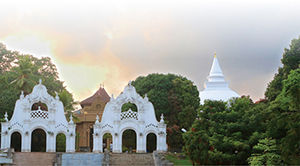
Jinadasa Perera was a man who lived in Kelaniya, a suburb of Colombo in Sri Lanka. The city is known for its Buddhist Kelaniya Temple, which sits on the bank of the Kelani River. Jinadasa’s mother was named Simona and he had two younger brothers and two sisters. The younger sister was named Violet. He had attended the Rahula school and completed the fifth grade.

His father was a poor farmer and Jinadasa left school to work to help support his family.  He did odd jobs until his sister married a man named Wijisiri, who made his living by manufacturing incense. Jinadasa then joined his brother-in-law in making incense. Their family business was prosperous, employing up to 30 people at a time.  They made incense by blending charcoal ash with a fragrant substance and marketed incense through two brands, Ambiga and Geta Pichcha.

Jinadasa entered into a relationship with Wijisiri’s sister, Kusumi, who he lived with for several years, though they were never officially married. Since they quarreled, Jinadasa left Kusumi and moved to the south of Sri Lanka where he acquired a new girlfriend named Nanda, whom he lived with in the town of Weliggama. There he produced incense with a friend whose name was Somasiri.

After five years in Weliggama, Jinadasa took a trip to Colombo and there he learned that his brother-in-law, Wijisiri, had incurred an injury to his knee which made him bedridden. This induced Jinadasa to move back to Kelaniya to help with Wijisiri’s incense business.

After being there for a few days, in September 1985, Jinadasa went by bicycle to sell incense at the local market. On the way, in the village of Nugegoda, he was run over by a bus and died immediately.

One of Jinadasa’s brothers, Chandradasa, went to the mortuary to identify the body. Chandradasa observed massive injuries on Jinadasa’s body from the left lower ribs up and across the body, which appeared to be caused by the tires of the bus. An autopsy revealed that several ribs had been broken on the left side of the chest, which punctured the lungs. The liver and the spleen were ruptured.

Jinadasa Reincarnates as a Girl

Purnima Ekanayake was born in 1987 in the northern Sri Lankan city of Bakamuna, which is 145 miles away from Kelaniya. Prominent birthmarks were observed on the left side of Purnima’s chest.  Her father was a principle of a secondary school and her mother was a teacher at that school.

As a small child, Purnima repeatedly said: “People who drive over people are bad persons.” She would ask her mother, “Do you not also think that persons who cause accidents are bad people?”

Purnima’s mother became upset by a serious motor vehicle collision that occurred near their home. Purnima responded by telling her mother, “Do not think about this accident. I came to you after such an accident.” Purnima said that after the accident she closed her eyes and came “here.” When her  mother asked if she was treated at a hospital after the accident, Purnima related that she was not taken to a hospital as: “A heap of iron was on my body.” She said she was killed by a “big vehicle.”

Purnima reports Observing her Past Life Funeral and Existence in the Spirit World between Death and Rebirth

Purnima elaborated that after the accident she floated for a few days in a dimly lit setting, where there were many other people floating around her. From the spirit realm she observed her own funeral where she saw people crying. She then saw a light, which she went to and then came “here,” meaning to her parents and home in Bakamuna.

Past Life Memories of Being an Incense Maker

Purnima said that she was a man in her prior lifetime and that her family made incense, specifically two types of incense, Ambiga and Geta Pichcha. (These brands, by the way, did not exist in Bakamuna.)  Further, she said that the family employed outsiders in making incense and that she would supervise these people. She demonstrated her habit of walking with her hands behind her back, observing the progress of workers.

She related that their incense factory was near a brick factory and a pond. Purnima related that the family had two vans and a car. She stated that her mother’s name was Simona. Purnima said she attended Rahula School, though only up to the fifth grade. All these statements were correct for the life of Jinadasa.

Past Life Relationships

Purnima also said that, in her past lifetime, she was married to a sister-in-law whose name was Kusumi. She also said she had two wives. Dr. Harraldsson, in his narrative of this case, explained that in Sri Lanka couples who are not officially wed but who are living together are considered married. As such, these statements were accurate for the life of Jinadasa.

Purnima Recognizes the Kelaniya Temple and the Location of her Past Life Home

When Purnima was four years old, the family was watching a television program on the Kelaniya Temple. Purnima said she recognized the temple. Soon thereafter, her parents organized a trip for their students to tour the Kelaniya Temple, which as noted above, is 145 miles from Bakamuna. Purnima joined her parents on this trip and once on the temple grounds, she told her parents that in her past life, she used to live across the river.

An opportunity to investigate Purnima’s memories arose when in January 1993, her father hired a new teacher who spent weekends in Kelaniya, as he married there. This teacher, WG Sumanasiri, agreed to investigate Purnima’s statements regarding a past life across the river from the Kelaniya Temple. The information that he was given included that Purnima was a man who sold incense sticks on a bicycle who died in a fatal accident involving a large vehicle. In addition, he was given the names of the incense that this man sold, specifically, Ambiga and Geta Pichcha.

Purnima’s Past Life Family is Found

On his return to Kelaniya, Sumanasiri found that there were three incense makers who were located across the river from the temple. One of these manufacturers, LA Wijisiri, made the Ambiga and Geta Pichcha brands. Sumanasiri learned that Wijisiri’s brother-in-law and business partner, Jinadasa Perera, had been killed when he was hit by a bus while taking incense to a market on a bicycle. This accident occurred in 1985, about two years before Purnima was born.

Soon after Sumanasiri conveyed his findings, Purnima, her parents, Sumanasri and his brother-in-law made an unannounced visit to the Wijisiri family. When they approached the residence, Purnima whispered to her mother: “This incense dealer (referring to herself) had two wives. This is a secret. Don’t give them my address. They might trouble me.”

Wijisiri’s daughters were home and they let the visitors into the house. Wijisiri was not home at that time. Shortly thereafter, Wijisiri walked up to the house and Purnima told her party:

“This is Wijisiri, he is coming. He is my brother-in-law.”

Purnima inspected packets of incense that were found at the Wijisiri home. She then told Wijisiri that she herself used to sell these incense sticks. She then asked:

“Have you changed the outer cover of these packets?”

Wijisiri indeed changed the packet colors and design about every two years.

Purnima noted that Wijisiri had an injury to his knee, which resulted in him not being able to bend it. She told Wijisiri that she herself, as Jinadasa, had applied medicine to his knee injury.

Purnima asked Wijisiri about past life friends, including Somasiri, who made incense with Jinadasa in Weliggama, and Padmasiri, the brother of Wijisiri. She also asked about her past life sister, who was married to Wijisiri, and her past life mother. She also noted that the Wijisiri family had their home and factory at a different place when Jinadasa was alive, which was correct. Purnima’s knowledge of these facts convinced Wijisiri that she was indeed the reincarnation of Jinadasa.

Purnima then showed Wijisiri her birthmark and she said: “This is the mark I received when I was hit by a bus.” She also stated that her fatal accident occurred in Nugegoda, which was true.

Purnima Identifies a Past Life Sister and Friend

During this visit a number of people stood outside the Wijisiri house, including Somasiri. Purnima saw him and said, “This is my friend.” When her father asked who this person was, she replied: “This is Somasiri, my friend.” Purnima also pointed to a woman and said: “This is my younger sister.” The woman was Violet, Jinadasa’s younger sister.

Purnima Remembers how to Make Incense

Purnima was asked if she remembered how to make incense. She replied that there are two methods. In one, cow dung is used and the other utilizes charcoal ash from firewood. A paste is made from either the cow dung or charcoal ash, to which is added an ingredient that lends the fragrance. The paste is applied to a bamboo stick and rolled, to create an incense stick. She noted that in her past life, she used the charcoal method of making incense. All these statements were correct.

Dr. Haraldsson noted that Purnima’s father only had heard that cow dung was used to make incense and her mother had no knowledge of the manufacturing process. Haraldsson also affirmed that Purnima’s family and the Wijisiri family had no knowledge of each other prior to their meeting in 1993.

Despite Gender Change, Purnima is Feminine

We have observed in other cases involving gender change that gender identity issues and homosexuality can result. A dramatic case in this regard is:

Reincarnation Case of a Japanese Soldier | Ma Tin Aung Myo

This did not occur with Purnima, as she enjoyed wearing beautiful dresses, indicating that she is very comfortable with her femininity.

Principle of Reincarnation-Understanding Past Lives

Change of Gender: Jinadasa, a man, reincarnated as a woman.

Past Life Birthmarks: Purnima had birthmarks on the left side of her chest corresponding to injuries incurred by Jinadasa.

Relationships Renewed through Reincarnation: Purnima was reunited with her past life family and friends.

Spirit Being Involvement: Purnima described her experience in the spirit realm. Another case that involves a detailed account of the transition from death to rebirth is: The Reincarnation Case of Nai Leng | Choate

Source: Haraldsson, Erlendur and Matlock, James: I Saw a Light and Came Here, White Crow Books, 2016, pages 3-12

This case is part of the Walter Semkiw Memorial Archive

Now maintained by the Institute for Life Continuity Studies (ILCS), a 501(c)(3) nonprofit. For evidence-labeled research, modern analysis tools, and community discussion, visit our home site.

Reincarnation.info ·
Our Methodology ·
Interactive Case Map ·
Support This Work

A Ukrainian Jew Reincarnates into a Christian Family in Oklahoma: The Reincarnation Case of Marty Martyn | Ryan Hammons

How Derived: Past Life Memories in Childhood

Researched by: Jim Tucker, MD and Erlendur Haraldsson, PhD

From: I Saw a Light and Came Here, by Erlendur Haraldsson, PhD and James Matlock, PhD

Article by: Walter Semkiw, MD

The Life of Marty Martyn

Morris Kolinsky was born in Philadelphia May 19, 1903. His parents were Ukrainian Jews who had recently immigrated to the United States. He had two sisters, one of whom died in childhood. Morris and his surviving sister moved to New York City to get into show business. Morris did manage to tap dance on Broadway. He then relocated to Los Angeles where he took the stage name Marty Martyn.

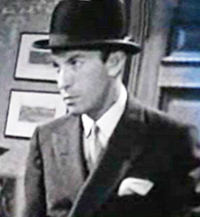
In 1932 Marty had a part in the movie Night After Night, whose star was George Raft, though Marty’s role did not involve any spoken lines. He was unable to make a living as an actor, so he founded the Marty Martyn talent agency. His agency was successful.

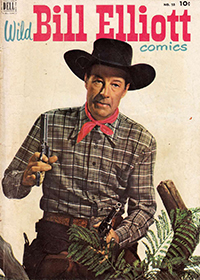
An actor Marty befriended as Gordon Nance, who made cowboy movies using the stage name Wild Bill Elliot. Nance also did commercials for Viceroy cigarettes.

Marty Martyn was married four times, accumulating one biological daughter and five stepchildren. With his fourth marriage, Marty legally adopted his three most recent stepchildren, who were all boys. The family lived in Beverly Hills on Roxbury Drive in a large house with a pool in the backyard.

Marty loved the beach, had an extensive collection of sunglasses and he reportedly suffered sunburns frequently. He enjoyed Chinese food, fine clothes and travel, sailing to Europe on the Queen Mary and visiting Paris several times. Politically, he was a Republican.

Marty Martyn developed leukemia and died in the hospital of a cerebral hemorrhage on December 25, 1964 at the age of 61.

Marty Martyn Reincarnates in Oklahoma

Ryan Hammons was born in Muskogee, Oklahoma in 2004, 40 years after the death of Marty Martyn. Ryan’s mother’s name is Cindy and the family is Christian. The development of Ryan’s speech was delayed by enlarged adenoids, which are a cluster of immune system cells located in the back of the mouth. Enlarged adenoids can hamper breathing, as well as speech. After his adenoids were surgically removed, Ryan finally started speaking in full sentences when he was four years old.  At that point, Ryan started talking about a past lifetime.

Ryan said that he wanted to go home to Hollywood and begged his mother to take him there so that he could visit his “other family,” including his three adopted sons who he was worried about. He said he had two sisters and one biologic child, a daughter from his first marriage.

Ryan said that he worked for an “agency” where people changed their names. He inferred that he had power in this position by making statements such as:

“Do you know who I am? If you mess with me you won’t ever work in this town again.”

Ryan said that he had a big house with a swimming pool that was situated on a street that had a name with “rock” in it. Further, he said that he had traveled by ship, visited Paris and viewed the Eiffel Tower.

Ryan said that he had danced on Broadway and he like to demonstrate tap dance routines. In kindergarten, he would play at directing movies. He related that he used to go to Chinatown and when his parents first took him to a Chinese restaurant, Ryan knew how to use chopsticks without being taught. He had a fascination with sunglasses and he said in his past life, he had been sunburned often. Ryan also said that he didn’t like Franklin Delano Roosevelt (a Democrat.)

Spirit Being: Ryan observes Cindy from Heaven

Ryan told his mother that he had seen her from heaven and that he had known her from a previous life. He said that he had chosen her as his mother so that he could take care of her.

Ryan related that he remembered being in Cindy’s womb and he asked why she had wanted him to be a girl. Ryan stated that he observed her cry for a long time when Cindy learned that she was going to have a boy. Cindy was surprised that Ryan knew about the crying episode, which was true, but Ryan had no way to know about the incident by normal means as she or Ryan’s father never told him about it.

Cindy Investigates Ryan’s Past Life Memories and contacts Jim Tucker, MD

Cindy decided to investigate Ryan’s statements regarding a past lifetime and she researched books on Hollywood from the community’s library. As Cindy and Ryan were perusing these books, they came upon a photograph from the movie Night After Night. Ryan recognized one of the men in the photo as himself. This man is pictured to the right. Ryan said another man was named George and a third man in the photo was a friend of his who was a cowboy and who a starred in cigarette commercials. Unfortunately, the man who Ryan said was him in a past incarnation was not identified by name in the book or the movie credits of Night After Night.

With this information at hand, Cyndi contacted Jim Tucker, MD, an academic psychiatrist at the University of Virginia, who has taken over the work of the late Ian Stevenson, MD. When Ryan was five years old Dr. Tucker traveled to Oklahoma to study this case. A television production company that was making a program on children with past life memories came with Tucker.

Ryan Recognizes the Home of his Past Life Friend, Wild Bill Elliot

Based on a facial resemblance, production company staff made a tentative identification of who the actor was in the Night After Night photo that Ryan claimed was him. The company flew Ryan to Los Angeles and drove him by the home of this actor, but Ryan did not recognize it. Ryan did recognize the home of Wild Bill Elliot. Concluding that the proposed actor was an incorrect past life match, the TV production company hired a film archivist who eventually identified the mystery man in the photo as Marty Martyn. By this time, Ryan was six years old.

Ryan meets his Past Life Daughter

On a subsequent trip to California, Ryan met his past life daughter. This daughter was only eight years old at the time her father, Marty Martyn, died, while she herself was 57 years old when she met Ryan. Still, Ryan said that he recognized her face.

Ryan wants to Study Judaism, his Past life Religion

Though Jim Tucker did the initial investigation of this reincarnation case, psychologist Erlendur Haraldsson, PhD did follow-up interviews with Cindy by phone. Ryan was 11 years old at the time of Dr. Haraldsson’s phone interviews. Haraldsson noted at this time that Ryan loved music from the 1950’s and that he affiliates with the Republican party.

Most interestingly, Dr. Haraldsson noted that Ryan wants to study Judaism, which is a source of “friction” within his Christian family.

Principles of Reincarnation-Understanding Past Lives

Change of Religion: Marty Martyn was Jewish and of Ukrainian ethnicity, while Ryan was born to a Christian, American family in Oklahoma.

Spirit Beings in Reincarnation Cases: Ryan said that he picked Cindy to be his mother from the spirit realm. Further, he knew Cindy wanted a girl during her pregnancy with Ryan and that she cried for a prolonged time when she found out that she was having a boy. Ryan witnessed this event from the spirit world.

Relationships Renewed through Reincarnation: Ryan met his past life daughter. In addition, Ryan stated that he knew Cindy in a previous incarnation

Past Life Talent: Ryan knew tap dance routines and he was adept at using chopsticks without instruction.

Source: Haraldsson, Erlendur and Matlock, James: I Saw a Light and Came Here, White Crow Books, 2016, pages 214-218

This case is part of the Walter Semkiw Memorial Archive

Now maintained by the Institute for Life Continuity Studies (ILCS), a 501(c)(3) nonprofit. For evidence-labeled research, modern analysis tools, and community discussion, visit our home site.

Reincarnation.info ·
Our Methodology ·
Interactive Case Map ·
Support This Work

A Boy Reincarnates as a Girl, Who Retains a Male Mindset: The Reincarnation Case of Karunasena | Ruby Silva

How Derived: Past Life Memories in Childhood

Researched by: Ian Stevenson, MD and Francis story

Article by: Walter Semkiw, MD

The Life of Karunasena

GG Karunasena was born on March 4, 1952 in the small Sri Lankan town of Aluthwala. His father, who was bald, was GG Punchi Singho and his mother was DW Punchi Nona. In contrast to many natives of Sri Lanka, both parents were fair-skinned. Karunasena had two older brothers, Dhanasiri and Upasena. He had a younger brother named Nandasena, who Karunasena was very fond of. The family’s nickname for Karunasena was Kira.

The family were farmers, who owned a rubber tree plantation and coconut groves. They also grew vegetables in cordoned off plots, which could spark arguments with neighbors regarding whose land it was to cultivate. Karunasena’s father also drove trucks and buses for income. In 1957, GG Punchi Singho suffered a stroke, was bedridden for two years, then recovered to the extent that he could walk, though with a cane and a limp.

Karunasena liked to be clean and well dressed. His hobbies included dancing, drumming and flying kites.  He had a rather avid interest in Buddhism.

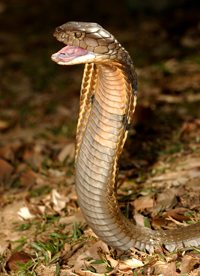
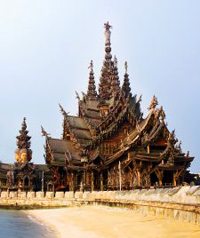
phobias in reincarnation casesOne dramatic event that occurred in the family’s life was when two cobras made their way into the Singho home. One snake was killed and the other one was burned.

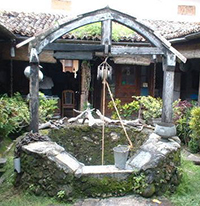
Karunasena enjoyed gardening and was noted to exert himself vigorously on the family’s agricultural land. When he was seven years old, Karunasena returned from working in the fields, went to the family’s well to wash himself and then fell in and drowned. One of Karunasena’s brothers retrieved his body and held him. The family discussed whether to take Karunesna to the hospital, but it was determined that Karunesena was dead and that there was no point in seeking medical attention. Karunasena’s death occurred on July 18, 1959. He was buried in the grounds of the family’s rubber plantation.

Ruby Silva, the Reincarnation of Kurunasena, is Born

Ruby Kusuma Silva was born on September 12, 1962 in the Sri Lankan city of Galle, about three years after the death of Karunasena. Her father was WK Simon Silva and her mother was Somie Nona Jayasekera. At the time that Ruby was born, her parents had seven children, six boys and one girl. The family lived in the town of Batapola, which lies halfway between the cities of Galle and Colombo. When Ruby was two years old, the family relocated to the village of Pollewa that was 1.5 kilometers or about a mile from Batapola.

Ruby started to speak when she was less than 1 ½ years old and began to talk about a previous life when she was still under two years old. She said that in her previous life she had been a “brother” and not a “sister.”  Rudy stated she wanted to be called a “brother” or “son” and not a “sister” or “daughter.”

IISIS ReincarnationEvidenceYellowBusFrontViewWhen Ruby first spoke about her past life she did not seem to have adequate vocabulary to express herself. At one point, when she was trying to relate that cobras had invaded her past life family’s home and that one snake was burned and another killed, she used childish words. Her father, Simon, related that he had to translate her baby words into adult terms. When she wanted to convey that her past life father was a bus driver, she knew the word for bus but not for driver, so she communicated this by making motions of a person steering a vehicle.

Rudy seemed to perplexed that she was a girl and would say “why did I become a girl?” She also said “I am big” and said that she could do the work of a big person. When her mother asked why she had come to them, Ruby replied, “I was beaten by the other mother.”

Ruby said that her parents were fair-skinned and that her father was bald and lame. Rudy said that she lived in a town called Aluthwala and that she attended religious Sunday school at the temple there. She implied that her current parents were not her real parents, as she stated that her mother and father were in Aluthwala.

Regarding her past life death, Ruby said that she had been working in the paddy fields, went to the well to wash and then slipped into the well and drowned. She also said that she had injured her leg in doing so and had bled, pointing to the right leg just below the knee. She said that one of her brothers said, “Let us take him to the hospital,” while the other brother said “He is dead.” She said that her mother was there and crying when she died. Ruby’s description was true regarding the death of Karunasena.

Ruby would talk as if she was still living her past life, speaking in the present tense. For example, she made the statements:

“there are piles of coconuts at my house”

“buses pass along the road by my house”

“the coconuts are brought by carts and lorries” (lorries are a term used in Sri Lanka for trucks)

“if you do not have coconuts here, we can get them at Aluthwala”

All these statements were correct for the life of Karunasena. Ian Stevenson noted Ruby talked as if she was “on leave” from her past life in Aluthwala.

Stevenson noted that Ruby’s remarks were often stimulated by an activity of a family member which would lead her to say, “I used to do that.” For example, when she saw her mother cutting vegetables, she reported that in her past life neighbors would argue with her family over fences separating their vegetable patches.  Ruby noted that her past life family was much better off financially than her current family.

Ruby Remembers her Past Life Name and Nick Name

Ruby said that at school she was known as Karunasena, but that at home she was called Kira. She said that she had two older brothers and one younger brother. Ruby noted that her older brother and she would go to Sunday school together.  She said that on the way to her past life home one comes to a culvert and then a junction. Her past life home, she related, was tiled and that the walls were color washed. Further, they had many coconuts at her past life home, which was in contrast to her contemporary home, where they had very few coconuts. Ruby related that her older brother would climb trees to bring down coconuts, which they would cut and drink water from. She said that her past life father would bring mangoes from a shop, as they did not have mango trees at their home. Ruby also stated that the family had a rubber plantation, though her past life mother would not allow her to go there. All these statements were correct for the life of Karunasena.

Ruby said that at the temple in Aluthwala, she saw a belly tree. Ruby said that she visited Kataragama, which is a well-known religious center in southern Sri Lanka. She correctly stated that at this center, there were big crowds, a bo tree and a temple. She also said that she had been to Galle and to another Sri Lankan city, Dodanduwa. These remarks were true for the life of Karunasena.

Ruby said that her aunts once washed a burnt part of a machine in a well. In actuality, the Singho family owned looms and one of Karunasena’s aunts had washed a part of a loom machinery that had become blackened with soot from an oil lamp. Karunasena had helped this aunt in cleaning of this machine.

Ruby’s Past Life Identity is Discovered

IISIS Reincarnation, Gender Identity Issues, Thai TempleRuby’s mother, Somie, traveled to Aluthwala in March 1966 and went to the Nandaramaya Temple inquiring whether there was a boy who fitted Ruby’s description of her past life.

After some investigation, Somie was referred to the Singho family. It became clear that Ruby’s memories matched the life of Karunasena. Due to the inquiries that were made, the Singho family heard about Ruby and her past life memories. They went to visit Ruby in Pollewa in April 1966. Aluthwala, where the Singho family lived, is about 14 kilometers or 8 miles from Pollewa. Ian Stevenson, MD, noted that the two families had no prior contact or knowledge of each other before they met.

Ruby Identifies her Past Life Family Members by Name

In April 1966 multiple family members of the Singho family came to visit Ruby and she recognized them on sight and identified all of them by name. These included:

GG Punchi Singho, the father of Karunasena: Specifically, when Ruby saw a man who was a stranger to the family approaching the house she said, “Here comes my father.” Ruby went to him and sat on his lap.

DW Punchi Nona, Karunasena’s mother

Dhanasiri, Karunasena’s older brother

Nandasena, the younger brother of Karunasena

JG Mary Nona, Karunasena’s aunt: No one in the Silva family knew who she was but when Ruby met her, Ruby was very friendly and even affectionate.  Her father asked, “Who is she?” Ruby replied, “That is my aunt.”

Karunasena’s maternal uncle: When he came to the Silva house, he asked Ruby, “Who am I?” She replied “You are my uncle.”

Ian Stevenson noted that these identifications were especially impressive as Ruby’s family had no idea of who these past life family members were when they arrived at their home.

Past Life Phobia

Ruby had a phobia of wells. At the age of 3 ½ she would go to the well only with an adult. She warned her brothers and other persons about the danger of falling into a well. This phobia continued to at least 1968, at which time Ruby was 6 years old, but had resolved by the time she was 8 years old.

Ruby’s Masculine Behavior

As with other cases that involve gender change, Ruby retained the mindset of her previous incarnation, that of a male. In contrast, her older sister did not demonstrate male traits. These included:

A desire to wear boy’s clothing: She said that she had worn trousers in her prior life and she asked to be given trousers. When she would wear a dress, she would wear boy’s shorts underneath. Ruby would also wear her brothers’ shirts and undershirts.

Playing of boys’ games: Ruby liked to fly kites, play marbles, play cricket, ride her brother’s bicycle and climb trees, once even climbing a coconut tree to fetch the fruit.  Recall that Karunasena liked to fly kites.

Ruby liked to whistle and when she wanted to get someone’s attention, she would make a clucking noise from the back of her throat. Karunasena had made the same clucking sound.

Ruby could be aggressive and during arguments with her brothers, she would punch them with her fists.

Ruby had no interest in cooking.

She asked her family to call her a brother or son, not a sister or daughter. Ruby’s mother was referring to Ruby as her son at least up to 1968.

When Ruby attended the funeral of an elderly woman, she told her mother that when she, Ruby, died, she would like to be reborn as a boy.

Ian Stevenson gave Ruby Draw-a-Person Tests twice, in which Ruby was given free choice regarding the gender of the two people she was instructed to draw. In 1968, Ruby drew two males, which Stevenson interpreted as Ruby having an identification as a male. In 1973, Stevenson gave her another Draw-a-Person Test. At this time, she drew a woman and then a girl, indicating that identification as a female had emerged.

Past Life Traits: Similarities between Karunasena and Ruby

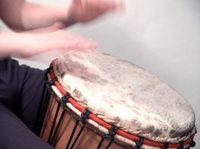
ReincarnationPastLifeResearchDrummingIan Stevenson tabulated common features of Ruby and her past life persona, Karunasena. These include:

Both were interested in gardening and planting. Ian Stevenson noted he witnessed Ruby using a shovel type tool with unusual vigor.

Both liked to dance to drum music. When Ruby heard drum music, she would invite her brothers to sing and dance with her.

Both were interested in religion and in particular, Buddhism.

Both liked high quality clothes, with both preferring clothing worn by boys

Both were aggressive: Karunasena was known to be mischievous and he would get into physical fights with other boys. As noted, Ruby would use her fists to strike her brothers during arguments.

Both were very fond of Karunasena’s younger brother, Nandasena. When he would visit Ruby, she would hide Nandasena’s bicycle so that he would be forced to stay longer. Nandasena would typically stay 1 to 2 days with the Silva family.

Principles of Reincarnation: Understanding Past Lives

Gender Change with Gender Identity Issues: Though a girl, Ruby retained the mindset of a boy. A dramatic case in which gender change through reincarnation resulted in homosexuality can be reviewed at the following page:

A Male Japanese Soldier Reincarnates as a Girl and becomes a Lesbian

Past Life Phobia: Ruby had a fear of wells due to her death caused by falling into a well.

Past Life Talents and Behaviors: Ruby was skillful at playing games typically engaged in by boys. She was able to climb trees. She could wield a shovel type tool with the skill of an adult.

Relationships Renewed though Reincarnation: Ruby was reunited with her past life family.

Spirit Beings in Reincarnation Cases: Ruby reported events after Karunasena’s death, such as the family’s discussion of whether to take him to the hospital. As such, the soul of Karunasena/Ruby was able to observe events from the spirit world.

Source: Stevenson, Ian: Cases of the Reincarnation Type, Volume II, Ten Cases in Sri Lanka, University of Virginia Press, 1977, pages 163-202

This case is part of the Walter Semkiw Memorial Archive

Now maintained by the Institute for Life Continuity Studies (ILCS), a 501(c)(3) nonprofit. For evidence-labeled research, modern analysis tools, and community discussion, visit our home site.

Reincarnation.info ·
Our Methodology ·
Interactive Case Map ·
Support This Work

Reincarnation Cases of Lou Gehrig | Christian Haupt and Christina Gehrig | Cathy Byrd

How Derived: Past Life Memories in Childhood

From: The Boy Who Knew Too Much, by Cathy Byrd-Video Provided Below

Article by Walter Semkiw, MD

Lou Gehrig, born in 1903, is one of the most famous baseball players in history, not only for his talent, but due to his death from amyotrophic lateral sclerosis (ALS), a neuromuscular disorder now widely known as Lou Gehrig’s disease. Gehrig died on June 2, 1941 at the age of 37.

Christian Haupt, the son of Michael Haupt and Cathy Byrd, was born in 2009. According to his mother, Cathy, ever since he was 2 years of age, Christian has been obsessed with baseball and at that age insisted on wearing a baseball uniform, including shoes with cleats, everywhere he went.

Christian was not interested in anything else and would not engage in any other play except baseball. Since the time he could walk, Cathy relates that he carried a small wooden baseball bat.  None of this made sense as no one in the family was interested in baseball. Michael, Christian’s father, grew up in Germany where baseball is not played, so he was not the source of his son’s enthusiasm.

Past Life Memories of being a Tall Baseball Player and drinking Alcohol

Since he was could talk, Christian insisted that he was a “tall baseball player.” 1

After Cathy placed a video on YouTube of Christian playing baseball, the video went viral and caught the attention of Adam Sandler, who was in the process of filming his baseball themed movie, That’s my Boy, which came out in 2016. Adam liked the video so much he invited Christian to do a cameo role in his movie, which was being filmed in Cape Cod, Massachusetts.

The offer was accepted and Cathy and Christian flew to Boston on their way to cape Cod. When they were settling into their seats on the airliner, Christian made an unusual statement:

“When I was big, I didn’t wear seatbelts, and I drank alcohol,” which caused surrounding passengers to break into laughter.  2

Past Life Emotions: Christian doesn’t like Babe Ruth

Following the movie shoot, Cathy took Christian to a baseball game at Boston’s Fenway park. There, Christian saw a large portrait of Babe Ruth. In response, Christian made another unusual statement:

“I do not like him. He was mean to me!” Cathy questioned him, “Babe Ruth was mean to you?”  Christian in an agitated state said, “yes!” Christian continued to be very agitated, to the point that they had to leave the ballpark after only two innings.  3

Christian insists He had a Past Life

Back home in the Los Angeles area, Christian repeated:

“Mommy, I used to be a tall baseball player.”  Cathy corrected him by saying, “Yes, you will be a tall baseball player someday.” Christian got upset at the use of future tense and repeated, “No, I was a tall baseball player-tall like daddy!”

“You were a grown-up? Like Daddy? Christian responded with a definitive: “Yes!” 4

Further, Christian told his sister that when he was a tall baseball player, he injured his knee and had to take time off from playing. 5

At this point, reincarnation came into Cathy’s mind as an explanation of her son’s statements, but this idea went against her Christian beliefs.  As more evidence of Christian having a past life emerged, Cathy shared that her struggle with her preexisting belief system was so great she felt she was “cheating on Jesus.”

This struggle also occurred with Bruce Leininger as he investigated the past life memories of his son, which is described in the: Reincarnation Case of James Huston, Jr. | James Leininger

Past Life Memories: Christian knows of Conditions of the Early 1900’s

At another point, Christian said, “Mommy…when I was a kid before, there was a fire in my house,” further explaining, “There was real fire—in the lights!”  Kathy realized he was talking about fire used for lighting fueled by natural gas, something he had not learned about by normal means. 6

Continuing, Christian said, “When I was a tall baseball player—tall like daddy—I used to stay in hotels almost every night”

Cathy asked, “Did you fly on airplanes?”

“No, mostly trains,” Christian responded. 7

Further, he said, “We played our games during the day because there were no lights on the field in the olden days.”  8

On another night, one night before going to sleep Christian, said:

“In the old days, we wore metal cleats but no batting helmets.” Cathy found this too was true, as she found batting helmets were not introduced until the mid-1950s. 9

Christian identifies himself as Lou Gehrig in a Past Lifetime

Christian continued to have an intense dislike for Babe Ruth. In an attempt to identify who Christian could have been, if indeed he was describing a past life, Cathy put together photos of baseball teams from Babe Ruth’s era.

Cathy pulled out a black and white photo of the 1927 Yankees team and Christian pointed to Babe Ruth and said, “There is dumb Babe Ruth.” Cathy then asked:

“Do you think there any players on this team who don’t like Babe Ruth?” From the 30 players or so that Christian had to choose from, he selected one player and said “Him!” Kathy then asked “Do you know him?” Christian replied “That’s me.”  10

Cathy pulled out additional pictures of the Yankees and asked if there were any other baseball players who didn’t like Babe Ruth. Each time Christian pointed to the same stocky guy with dimples in every photo. 11

Cathy didn’t know who this player was so she Googled “1927 Yankees dimples” and found that the man in the picture was of Lou Gehrig. Christian was three years old and two months at the time of these identifications. Cathy noted Christian has the same dimples in the very same places as Lou Gehrig did.

Cathy then showed Christian a photo of who she thought was Babe Ruth and Lou Gehrig with their arms around each other. Christian studied the photo and said, “That’s not dumb Babe Ruth. That’s the coach.” In looking at the fine print under the photo Kathy realized the Christian was right. The man next to Babe Ruth was Joe McCarthy, the coach. Keep in mind this occurred before Christian knew how to read. 12

Past Life Emotions: Cathy learns why Lou Gehrig disliked Babe Ruth

Cathy gained insight on why Lou Gehrig had a grudge against Babe Ruth. She found learned that Lou Gehrig and Babe Ruth were best of friends until they had a major falling out. Though they both played on the New York Yankees, the two men did not acknowledge each other for seven years, until July 4, 1939, when Lou Gehrig announced his retirement from baseball due to ALS.

Cathy found that Babe Ruth and Lou Gehrig had been best of friends since 1925, but vowed never to speak again after an incident that occurred between Lou’s mother, Christina Gehrig, and Babe in 1932. Christina had become a surrogate mother to Babe Ruth who had been raised in an orphanage and did not have a mother of his own. By 1927 Babe Ruth became a fixture at the Garrick home, where Lou still lived with his parents. Babe remarried it 1929 and began leaving his 11-year-old daughter from a previous marriage in the care of Christina Gehrig while he and his new wife, Claire, traveled. When Christina told Babe and Claire she felt they were neglecting his daughter, it was the end of the relationship between Babe Ruth and the Gehrig family. Legend has it that the two men never acknowledged each other from that day forward starting in 1932. 13

Further, Cathy learned that Lou Garrick had a squeaky-clean reputation, while Babe Ruth was known for excessive drinking and womanizing. 14

Christian identifies his mother Cathy as his Past Life Mother, Christina Gehrig

When Cathy showed images of Lou Gehrig’s parents, she was in for a big surprise. After Christian confirmed that the names of Lou’s parents were Henry and Christina he referred to Christina and said, “Mommy, you were her.” 15

Reincarnation research does show that people do plan lifetimes to be reunited with individuals they have known and loved before. In this light, please review: Ian Stevenson’s Twin Study

After Christian claimed that his mother Cathy, was also Lou Gehrig’s mother, Christiana, Cathy decided to explore this possibility. She went for three past life regressions sessions and in her assessment, she tapped into the lifetime of Christina Gehrig in each of the three sessions. Cathy describes how in her regressions, she learned details of the life of Christina Gehrig which she did not learn by normal means. She later verified these details through extensive research.

Cathy strongly relates to Lou Gehrig’s mother and she even told Christian that she believes she is indeed his mother from a past life, Christiana Gehrig.

Synchronistic events and a “Wink” from the Universe

In reincarnation cases, anniversary phenomenon and synchronistic events are often observed, as described in Principles of Reincarnation. These occurrences can be seen as being orchestrated by spirit guides or one’s own soul.

Such events occurred when Cathy and Christian took a trip to the East Coast to visit Lou Gehrig’s home and other related sites in New York.  For their return, they had reservations to fly from Albany, New York to Los Angeles via Charlotte, North Carolina. When she learned that the Charlotte flight had been cancelled, on a whim, Cathy decided to take a flight to Tampa Bay, Florida and then connect to Los Angeles the following morning.

It turned out that the Yankees were playing the Tampa Bay Rays that weekend and Cathy decided to delay their return home by another day and attend the game.

Prior to the game, Christian asked God to let him meet Evan Longoria of the Tampa Bay Rays. At the game, they learned that a large framed autographed photo of Lou Gehrig was being raffled off. Cathy bought a ticket for the raffle.

Then, prior to the game, a video was shown of Lou Gehrig giving his “Luckiest Man Alive” speech when he announced his retirement due to ALS. In turned out that Cathy and Christian had walked into a pregame presentation honoring Lou Gehrig for ALS Awareness Day. Cathy reflected on the odds:

“Here we were, in a city that we were not supposed to be in, preparing to see a Yankees game, and a video of Lou Gehrig was playing on the big screen.” 16

Cathy then related that when the pregame ceremony concluded, she and Christian walked down to the dugout to get a closer view of the players as they were warming up on the field. Then, out of nowhere, a man came up who introduced himself to Christian. It was Evan Longoria.

To cap it all off, Cathy and Christian ended up winning the framed photo of Lou Gehrig. Cathy called these synchronistic events “a wink from the universe” and validation that she was on the right path.  17

Rather than just coincidence, as mentioned, I believe these events are coordinated by spirit beings, spirit guides or our own souls, to indeed communicate that we are on track in investigating reincarnation cases.

Principles of Reincarnation and Understanding Past Lives

Physical Resemblances:  Cathy notes “uncanny” physical similarities between Christian and Lou Gehrig. In both faces, there are prominent dimples with the one on the left being distinctly deeper than the one on the right. Christian is left handed, as was Lou.  It will be interesting to observe how Christian’s facial features develop over time, to see if a resemblance in facial features persists.

In the James Huston, Jr. | James Leininger case, we have images over four stages of life showing similarity of facial features over time. To view these images, go to: James Leininger Case

Past Life Talent and Behavior: Christian Haupt demonstrates Lou Gehrig’s obsession with baseball, as well as his talent. It was said that Lou Gehrig would rather play baseball than eat, a trait Cathy says her son Christian shares. 18

Relationships Renewed through Reincarnation: If these reincarnation cases are accepted, then the mother of Lou Gehrig, Christian, was reunited with her son Lou through the personas of Cathy Byrd and her son, Christian.

Spirit Beings in Reincarnation Cases: It is likely that spirit guides or Christian’s own soul orchestrated the synchronistic events at the Yankee game in Tampa Bay, which Cathy interpreted as a wink and validation from the universe that they were on the right track in terms of Christian being the reincarnation of Lou Gehrig. These types of events are common in reincarnation cases.

Of interest, Jack Canfield has endorsed Cathy’s book, The Boy Who Knew Too Much.  View: Reincarnation Case of Horatio Alger | Jack Canfield

Footnotes

  1. Byrd, Cathy, The Boy Who Knew Too Much, Hay House, Inc., 2017, p 2
  2. Ibid, p 13
  3. Ibid, p 24
  4. Ibid, p 29-30
  5. Ibid, p 35
  6. Ibid, p 35
  7. Ibid, p 39
  8. Ibid, p 46
  9. Ibid, p 71
  10. Ibid, p 47
  11. Ibid, p 48
  12. Ibid, p 49
  13. Ibid, p 104-105
  14. Ibid, p 55
  15. Ibid, p 57
  16. Ibid, p 220
  17. Ibid, p. 221
  18. Ibid, p 55


This case is part of the Walter Semkiw Memorial Archive

Now maintained by the Institute for Life Continuity Studies (ILCS), a 501(c)(3) nonprofit. For evidence-labeled research, modern analysis tools, and community discussion, visit our home site.

Reincarnation.info ·
Our Methodology ·
Interactive Case Map ·
Support This Work

Ian Stevenson, MD Twin Study-Soul Plans & Past Life Relationships Renewed through Reincarnation

The twin study published by Ian Stevenson, MD provides evidence that souls plan lifetimes to be reunited with loved ones.

Ian Stevenson, MD
Ian Stevenson, MD

Article by Walter Semkiw, MD from Born Again

A study that dramatically demonstrates that we reincarnate with love ones from past incarnations involves a set of 31 twins that Ian Stevenson researched, in which enough information was given by the twins to factually validate their past incarnations.

He found that in all these cases, involving 62 individuals, the twins had some type of intimate relationship in their prior incarnations.

The most common type of past life relationship was that of siblings, which represented 11/31 or 35% of cases. One set of twins were also twins in their prior incarnations.

In 9/31 or 29% of twin cases, the twins were friends, acquaintances or business associates. Other family relationships, such as being cousins, made up 6/31 or 19% of twin cases. In 5/31 or 16% of twin cases, the twins were married in the past incarnation.  This information is summarized in the table provided below: (1)

Past Life Relationships of Twins:


Siblings-35%

Friends, business associates-29%

Other family relationships-19%

Spouses-16%


Souls Plan Lifetimes


Past Life Relationships
Burmese Sisters Reincarnate as Twins

These twin studies, as well as other same family reincarnation cases, show that souls can plan incarnations from the spirit world and even choose parents for upcoming incarnations.

One set of twins in this study also shows how facial features can remain consistent from lifetime to lifetime. This involves the reincarnation cases of Daw Aye Phyu | Ma Nyunt Nyunt San and Daw Sapai | Ma San San Nyunt, whose images are provided to the right. Additional twin reincarnation cases with significant past life relationshipa are provided below:


The Power of Souls: The Tripathi Twins are Murdered, then Reincarnate as Twins Again

Sri Lankan Rebels Johnny and Robert are Killed and Reincarnate as Twin Girls

Same Family Reincarnation Cases in which Sisters are Reborn as Identical Twin Girls: The Pollack Reincarnation Cases

Grandparents Reincarnate as their Own Daughter’s Fraternal Twin Girls: Cases that Involve Gender Change, Muslim Reincarnation and Change of Religion

Nyein and Gywin, Born on the Same Day in Burma, Who Married and Died on the Same Day, Reincarnate as Twin Boys

Two Japanese Soldiers in Burma Reincarnated as Burmese Twin Girls, San and Yin, Demonstrating How War is Self Defeating


Soul Planning Results in Destined Relationships


Reincarnation cases also show that souls can plan lifetimes to be brought together even when they are not born into the same family. These are described in the section Relationships Renewed through Reincarnation.

How do we connect with the people we have planned to be with? The answer, I believe, is destiny. In analyzing past life cases, it appears that we all have a predetermined destiny or life plan, which brings us to the people we are supposed to spend time with. To better understand how destiny works, I use the analogy of a journey.

UniversalTravel735finalThink of your life as an extended vacation that you plan in advance. You decide who you want and need to see, where you want to go and what activities you would like to participate in. You coordinate your itinerary with the people you are to rendezvous with. You, your karmic friends and loved ones all agree to the plan before you are born.

Once you come into life, destiny ensures that you meet up with your karmic soul group. The settings for karmic affiliations can be our families, as noted in the twin studies, as well as our work life and recreational pursuits. These settings are stages on which we play out the karmic dramas of our lives. This casts a new light on Shakespeare’s phrase, “All of life is but a stage.”

We meet up with different karmic groups at different points in life. When we get the urge to take a new job, travel to a new city or take up a new recreational pursuit, many times this is a part of our destiny being played out. New venues bring us to karmic or soul groups we need to be with. When we meet up with our past life friends, though we may not be aware of what the past life relationship was, we have a sense of familarity or attraction.

Reincarnation and Love at First Sight: A Likely Past Life Relationship

The phenomenon of “love at first sight” is one example of how emotions can bring together individuals who have made a plan or contract to be together even before they were born.

Reincarnation and Free Will

If it is true that we have a destiny or life plan, one must question whether we have free will. My belief is that though we all have a predetermined itinerary that we are committed to honor; we have free will in what we do along the way. Indeed, growth and human evolution could not occur without free will. Some people may have a more structured itinerary that limits diversionary treks, while others may have a less structured game plan. Either way, we have free will along our destined paths.

Déjà Vu and Reincarnation

Karmic groups provide insights regarding déjà vu experiences. If we meet up with people we have known in past lives, it is not surprising that we may have a spark of recognition when we meet. Since people have consistent patterns of behavior, we may recognize these traits and idiosyncratic reactions when situations recur. Finally, déjà vu may occur if we recognize an event that is part of our itinerary. We may become aware of a road mark along our predetermined path.

Relationships Renewed through Reincarnation

Reincarnation Research Home Page

This case is part of the Walter Semkiw Memorial Archive

Now maintained by the Institute for Life Continuity Studies (ILCS), a 501(c)(3) nonprofit. For evidence-labeled research, modern analysis tools, and community discussion, visit our home site.

Reincarnation.info ·
Our Methodology ·
Interactive Case Map ·
Support This Work

Planning Lifetimes & Relationships Renewed through Reincarnation-Introduction

Souls can plan lifetimes, which implies a personal destiny, as supported by announcing dreams. The symbol for Planning Lifetimes is a folding map, our life’s journey.

Planning future lifetimes Article by Walter Semkiw, MD

Reincarnation research shows that souls can plan lifetimes to be reunited with loved ones, including being reborn into the past life family. Souls can also be born in a different family but geographically close to the past life family, which allows a reunion to occur. These types of cases show that we plan lifetimes.

Future parents can learn that a particular soul that will become their child through dreams, in which the incarnating soul communicates with the future parents.  Ian Stevenson, MD, called these types of events: Announcing Dreams

The symbol for announcing dreams represents a folding map, in that we plan our lifetime’s journey to be reunited with loved ones, fulfill karma and participate in projects.

Planning Lifetimes Reincarnation Cases

Reincarnation Research Home Page

This case is part of the Walter Semkiw Memorial Archive

Now maintained by the Institute for Life Continuity Studies (ILCS), a 501(c)(3) nonprofit. For evidence-labeled research, modern analysis tools, and community discussion, visit our home site.

Reincarnation.info ·
Our Methodology ·
Interactive Case Map ·
Support This Work

Revival of the Deceased and the Walk-In Reincarnation Case of Sobha Ram | Jasbir Jat

How Derived: Memories in Childhood

Researched by: Ian Stevenson, MD

From: Twenty Cases Suggestive of Reincarnation, by Ian Stevenson, MD

Article by Walter Semkiw MD, from Born Again

Reincarnation Case 5 Larazus Raised by JesusThis is a very unusual case in that it involves bringing to life an apparently dead body, that belonging to Jasbir Jat, and the assumption of that body by a different soul, whose name in a prior incarnation was Sobha Ram.

As such, this is a reincarnation case where a soul “walks-in” to take over a body that had previously been inhabited by a different soul. In past life regression therapy literature, “walk-ins” are reported, though generally these cases do not involve the death of an individual. Instead, in regression literature, it is described that a soul inhabiting a body volunteers to leave that body so that another soul can incarnate by using that same body.

The concept of walk-ins has been a controversial one, as there can be debate whether walk-ins truly occur or whether the phenomenon represents a psychiatric disorder, such as multiple personality syndrome.

The case of Sobha Ram | Jasbir Jat provides strong evidence that walk-ins are a valid phenomenon. Ian Stevenson, MD researched this case in great detail and published it in his seminal book, Twenty Cases Suggestive of Reincarnation. Ian Stevenson chose to use a different term, “exchange incarnations,” to describe this type of case, where one soul gives up a body so that another soul can take it over.

The Life of Sobha Ram

IISIS REincarnation Cases 5 walk in reincarnation ian stevenson chariotSobha Ram lived in the farming village of Vehedi in the far northeast section of India, which borders Nepal. Vehedi at the time had a population of 2000 people and was eight miles north of the city of Muzaffarnagar, which has over 3 million inhabitants.

Sobha’s father was Shankar Lal Tyagi. Sobha was married and had a son named Baleshwar. The family was Brahmin and they observed the customs of this caste, including eating food only prepared by other Brahmins, cooking only with metal vessels, not earthenware, and wearing a sacred thread around the neck.

The family owned fields in the village, which were partitioned from fields belonging to other villagers. Sobha owned a ceremonial chariot, which was used for weddings. In May 1954, he drove his chariot to the town of Nirmana, where the family had relatives, to pick up the bride for a wedding ceremony that was taking place in Muzaffarnagar.

On the route from Nirmana to Muzaffarnagar, Sobha fell from the chariot and suffered a head injury. He was well enough to continue to the scene of the wedding and afterwards he was able to make it back with to his village. A few hours after Sobha returned to Vehedi, he died. Birth and death records were not maintained in the village, but based on the date of the marriage ceremony, Dr. Stevenson was able to establish the date of death as May 22nd or 23rd in 1954.

The Life and Apparent Death of Jasbir Jat

Reincarnation Cases 5 Walk-In Ian Stevenson Reincarnation CaseJasbir Jat, son of Girdhari Lal Jat, was born in 1950. The family lived in the village of Rasulpur, which at the time had a population of 1500 people and was located about 8 miles southwest of Muzaffarnagar. The family belonged to the Jat ethnic group and they were Hindu, though of a lesser caste than Brahmins.

In the spring of 1954, when Jasbir was 3 1/2 years old, he was thought to have contracted smallpox and it appeared that he had died. As Jasbir’s body appeared to be lifeless, his father, Girdhari, enlisted the help of his brother and other villagers to help bury his “dead” son. (1)

When Ian Stevenson researched this case, he asked Jaspir’s  family how the villagers of Rasulpur determined that death occurred.  Stevenson was told that they relied on the cessation of breathing, the cooling of the body and the inability to open the jaw of the deceased, which would indicate rigor mortis. As such, it appears that the determination that Jasbir was dead should have been accurate.

Raising of Jasbir’s Dead Body

Since it was already late in the evening, it was decided to postpone burial until the morning. A few hours later, Girdhari noticed stirring of the body and Jasbir gradually revived. It took several days before Jasbir could speak and several weeks before he could communicate effectively.

The family did not record the exact date of Jasbir’s apparent death and revival. Based on available information, Ian Stevenson estimated that this event occurred in April or May 1954.

Reincarnation Walk-In: Sobha Ram Emerges in the Body of Jasbir Jat

In Hinduism, sadhu, or shadhu is a common term for a mystic, an ascetic, practitioner of yoga (yogi) and/or wandering monks. The sadhu is solely dedicated to achieving the fourth and final Hindu goal of life, moksha (liberation), through meditation and contemplation of Brahman. Sadhus often wear ochre-colored clothing, symbolizing renunciation.

When Jasbir was finally able to converse, he demonstrated a dramatic change in personality and behavior. He said that he was the son of Shankar of the village of Vehedi and he wanted to go to that village. Further, he made these statements in the present tense, such as “I am the son of Shanker of Vehedi.” (2)

He eventually told his father, Girdhari, that his name was Sobha Ram. Jasbir said that he had a wife and that she was from the town of Molna, which was true for the wife of Sobha Ram. Though he was less than 4 years old, Jasbir suddenly referred to himself as an adult and he talked of having children, in addition to a wife.

Prior to his transformation, Jasbir acted like a normal child and enjoyed playing with toys. Afterwards, he did not like to play with toys or other children.

Jaspir told his family that he was a Brahmin, not a Jat, and he took on the habits of someone from the Brahmin caste. He demanded that only another individual who was of the Brahmin caste cook his meals. He would not eat food cooked in earthenware, but only food cooked in metal pots and pans. He began wearing a sacred thread around his neck, typical of a Brahmin.

Past Life Memories: Jasbir States He Fell from a Chariot & Died

IISIS REincarnation Cases 5 walk in reincarnation ian stevenson chariotJasbir stated that he had died when he fell off a chariot when returning from a wedding and that he hit his head against the ground. Further, Jasbir said that the reason that he fell from the chariot was that a man who had owed him money gave him poisoned sweets. The poison made him dizzy, which led to his fall. Jasbir stated that he clearly remembered falling off the chariot and that the exact place of his injury was called Dabal Pathak, which was on the road from Nirmana back to his home.

Jasbir gave a description of the town and property that he had previously lived in. He said that there was a culvert in his town, which was significant, as a culvert did not exist in Rasulpur. He stated that on his property, there was a well for water, which was partially inside the house and partially outside of the house, which Ian Stevenson noted was very unusual for a well in India. Jasbir stated that outside their property, there grew a peepal tree, as well as a tamarind tree. All these statements were true for Vehedi and the property where Sobha Ram lived.

Jasbir’s vocabulary changed after his transformation, in that he began using Brahmin words instead of words typically used by Jats. As an example, for the term house he would use the Brahmin term “haveli,” rather than the Jat word “hilli;” for the word clothes he would use the term “kapra” instead of “latta.” (3)

Fortunately, the family found a Brahmin woman who would cook for Jasbir. This continued for the next year and a half, until Jasbir acquiesced to his family’s pressure to eat food prepared by them. Jasbir’s father tried to keep his son’s unusual behavior quiet, but Jasbir’s requirement to eat like a Brahmin leaked out to the Brahmin community in Rasulpur.

Past Life Memories: Jasbir Recognizes his Aunt from his Lifetime as Sobha Ram

About three years after Jasbir’s death and the emergence as Sobha Ram, a woman visiting from Vehedi, the home town of Sobha Ram, heard about Jasbir’s sudden Brahmin behavior. She was Srimati Shyamo, a Brahmin originally from Rasulpur who had married a man, Ravi Dutt Sukla, who lived in Vehedi. Srimati was visiting her family in Rasulpur, where the Jat family lived, and was told about Jasbir, who now claimed to be from Vehedi.

When Srimati went to meet this unusual boy, Jasbir immediately recognized her as his “aunt.” In fact, Srimati had married a relative of Shankar Lal Tyagi, the father of Sobha Ram, so familial relationship did exist between Sobha and Srimati.

Whe Srimati returned to Vehedi, she informed her husband and the Tyagi family of this boy who claimed to be Sobha Ram, who stated that he died as a result of a chariot accident.

Past Life Memories: Jasbir Identifies Relatives of Sobha Ram on their Visits to Rasulpur and Reveals the Location of a Small Hidden Treasure

Members of the Tyagi family then traveled to Rasulpur to meet Jasbir. When Jasbir saw Shankar Lal Tyagi approaching, he stated, “My father has come. He is from Vehedi.” (5) Jasbir then ran into the house and requested that a Brahmin meal be prepared for his father.

IISIS reincarnation evidence belgian shepherdRecall that Shankar was indeed the father of Sobha. Jasbir related to Shankar the story of dying after he fell from a chariot when returning from a wedding. He added that on this trip, when he went into a house to borrow a cot for the wedding party, a dog bit him. Shankar, Sobha’s father, confirmed that this was true; Sobha was indeed bitten by a dog on the wedding trip, as described by Jasbir.

When he saw Ravi Dutt Sukla, the husband of Srimati Shyamo, Jasbir correctly identified Ravi’s relationship to Sobha. When Santoshi Tyagi approached, Jasbir identified him as his uncle, which was the correct relationship between Santoshi and Sobha.

When Sobha’s Uncle Pritvi came unannounced to Rasulpur and Jasbir saw him, Jasbir spontaneously ran up to him and called him “Mama,” which was correct, as this is an Indian term for maternal uncle. (6)

Jasbir then revealed that he (as Sobha) had borrowed from Uncle Pritvi a sum of money and he wanted that money to be returned to him. Jasbir disclosed the location where he had hid the money on the Tyagi property. Later on, the Tyagi family found the money exactly where Jasbir said it would be located.

In the presence of the Tyagi family, Jasbir continued by accurately reciting names of family members from his lifetime of Sobha. Jasbir stated that his mother’s name was Sona, he had a sister named Kela, his wife was called Sumantra, he had a son named Baleshwar, an aunt named Ram Kali and that his mother-in-law was Kirpi. All these statements were correct for the life of Sobha Ram.

Geographic Past Life Memories: Jasbir’s Finds his Past Life Home in Vehedi

A few weeks after the Tyagi family met Jasbir in Rasulpur, he was brought to Vehedi. Jasbir had never been to Vehedi before. At the railway station, he was asked to lead the way to the Tyagi home. Without hesitation, Jasbir walked from the railroad station directly to the Tyagi property, which was about 200 yards away from the station.

Later he was taken to the home of Ravi Dutt Sukla in Vehedi and from there, Jasbir led the way to the Tyagi home by a different route.

When shown the agricultural fields in Vehedi, Jasbir was able to correctly identify which fields belonged to the Tyagi family.

Past Life Memories: Jasbir Recognizes & Identifies Sobha’s Relatives in Vehedi

In Vehedi, Jasbir correctly recognized Surajamal and Mahendra Singh Tyagi as Sobha’s younger brothers, and Swaroop Tyagi as Sobha’s brother-in-law. He recognized Birbal Singh as the younger cousin of Sobha and when Birbal walked into the room, Jasbir ran up to him and said, “Come in, Ganghiji.” (7) Ganghiji was Birbal’s pet name, as he had large ears that made him look like Mahatma Gandhi.

When Jasbir was asked to identify another individual, Jasbir said, “This is my grandfather Rai Sahib,” who was indeed Sobha’s grandfather.

Jasbir spent several days in Vehedi and demonstrated detailed knowledge of the Tyagi family and its affairs. He very much enjoyed himself and was reluctant to go home. He would return to visit periodically, usually for several weeks at a time, and he said he wanted to live there. Jasbir felt isolated and lonely in Rasulpur, whereas in Vehedi, he felt at home.

Jasbir developed a very strong attachment to the Tyagi family and in particular to Baleshwar, Sobha’s son. In his visits to Vehedi, Jasbir would sleep with Baleshwar in the same cot, which Ian Stevenson noted was appropriate for a father and son to do, but was inappropriate for strangers. In this act, Jaspir was behaving as Baleshwar’s father.

At times, Jasbir threatened to run away from home so that he could live in Vehedi. Jasbir’s family was so concerned about his attachment to his past life family that they would not allow him to meet Sobha’s wife, Sumantra, who after his death moved back to her home village of Molna.

As time went on, the Tyagi family accepted that Sobha had come back to life through Jasbir and they regarded Jasbir as a full member of their family. When Baleshwar was considering marriage, Jasbir, though a child, was consulted like a father normally would be. Jasbir later attended Baleshwar’s wedding ceremony.

Past Life Karma Repaid: The Man who Poisoned Sobha makes Restitution

Reincanation Cases a poison warningJasbir insisted that the reason that he fell from the chariot was because a man who owed him money gave him poisoned sweets. Jasbir remembered specifically who this man was, though the name was not given in Ian Stevenson’s report of this case. Jasbir stated that this man owed him, as Sobha, 600 rupees, and that the man poisoned him with the intention to kill him so that the debt would not have to be repaid. Sobha’s family did not know anything about the poisoned sweets before Jasbir revealed this information. Jasbir eventually found this man who allegedly gave Sobha the poison. In an apparent act of restitution, this man gave Jasbir 600 rupees.

Ian Stevenson, MD excludes Fraud in this Reincarnation Case

Dr. Stevenson noted that though the villages of Rasulpur and Vehedi are only 20 miles apart as the crow flies, they were very isolated at the time due to the condition of the roads and transportation systems. Further, the two families were of different ethnic groups and castes. Given these factors, Stevenson could not see any way that Jasbir, at less than 4 years of age, could know of the life of Sobha Ram by any normal means.

Further, members of both families testified that they had no knowledge of each other prior to Jasbir’s death and transformation.

Stevenson noted that additional facts that would argue against fraud included Jasbir’s family’s unhappiness about his sudden Brahmin behavior. Further, the family initially disbelieved his statements regarding another life. They scolded him and tried to suppress information about his transformation to fellow villagers. As noted, they were also afraid that Jaspir would leave them for his past life family.

Spirit Being: A Holy Man Facilitates Sobha’s Reemergence in Jasbir’s Body

IISIS Reincarnation Cases 5 Walk-in Ian Stevenson holymanIn 1961, Ian Stevenson asked Jasbir what happened between the death of Sobha Ram in Vehedi and his reemergence in Rasulpur, through the revived body of Jasbir. Jasbir stated that after his death as Sobha, he met a sadhu or holy man, apparently in the spirit world. This holy man told him to “take cover” in the body of Jasbir, son of Girdhari Lal Jat. (8)

When Stevenson asked Jasbir what had happened to the original personality that inhabited Jasbir’s body prior to Sobha taking it over, Jasbir said that he didn’t know. Stevenson speculated that this prior personality may have reincarnated somewhere nearby. He made inquiries in the area regarding any children that may remember a past lifetime in which they died of smallpox between the ages of 3 and 4, but he found no such case.

Jasbir related to Dr. Stevenson that he continued to have dreams in which he still saw and interacted with this same discarnate holy man, who would make accurate predictions regarding the future. As an example, Jasbir’s father had taken the initiative to set up an arranged marriage for Jasbir, which neither the future bride or Jasbir were interested in. Jasbir said that in a dream, the holy man appeared and reassured him not to worry, as the marriage plans would fall through. Indeed, this came to pass.

In reflecting on why he, Sobha, a Brahmin, had reemerged in the body of Jasbir, who belonged to a Jat family of lower caste, who were considerably less well-off than the Tyagi family, Jasbir replied that he saw this as a type of a demotion. He knew of no incident, though, in the life of Sobha, that would warrant such a punishment.

Principles of Reincarnation & Understanding of Past Lives

Walk-in or Exchange Incarnation: Rather than a classic reincarnation case, where one soul is shown to incarnate into two bodies sequentially, this case involves a walk-in. Walk-ins or exchange incarnation cases involve two different souls who inhabit the same body in sequential order. The original soul inhabiting the body leaves the body to allow another soul to take over and make use of that body. Walk-in cases are considered to be extremely rare.

As Jasbir only lived for 3 1/2 years prior to his apparent death from smallpox, his original personality did not have a chance to develop. Whether the soul that inhabited the body of Jasbir prior to his apparent death had any type of relationship with the soul of Sobha is unknown.

Reincarnation Case 5 Larazus Raised by JesusReanimation or Raising of a Dead Body: Though a physician did not examine Jasbir after he apparently succumbed to smallpox, his body was lifeless to the extent that his father and fellow villagers were prepared to bury Jasbir. As noted above, the criteria they used to determine death were sound ones, including cessation of breathing, the cooling of the body and the inability of an examiner to open the jaw of the deceased. As such, it appears that the determination that Jasbir was dead should have been accurate.

How Jasbir’s revival occurred is unknown, though Jasbir, after his transformation, stated that a discarnate sadhu or holy man met him following his death as Sobha and encouraged to take possession of Jasbir’s body.

This turn of events begs the question of whether this holy man played a part in reanimating Jasbir’s lifeless body. If so, this feat parallels miracles attributed to Jesus who, according to the New Testament, brought Lazarus back to life and brought himself back to life through the Resurrection.

As the date of Jasbir’s apparent death was not recorded, it is not clear whether any time elapsed between the time of Sobha’s death, which was determined to have occurred on May 22nd or 23rd, 1954, and his reemergence through the body of Jasbir. Ian Stevenson estimated that Jasbir’s death from smallpox occurred in April or May 1954. As such, it is possible that Sobha’s death occurred at about the same time as Jasbir’s death, though an exact correlation regarding timing cannot be made.

Geographic Past Life Memory: Jasbir was able to find his way from the train station in Vehedi directly to the Tyagi family home without assistance. This is reminiscent of the Anne Frank | Barbro Karlen reincarnation case, as Barbro was able to spontaneously lead her parents from their hotel in Amsterdam directly to the Anne Frank House.

Renewal of Past Life Relationships through Reincarnation: By incarnating into Jasbir’s body, Sobha was eventually reunited with the Tyagi family.

Change in Ethnic Affiliation and Caste: Sobha belonged to the higher Hindu Brahman caste and he saw it as a demotion that he incarnated as a Jat of a lower Hindu caste, though he knew of no wrong action on his part that would account for such a punishment.

Spirit Beings in Reincarnation Case: Sobha reported that a spirit being facilitated his incarnation into the body of Jasbir.

To review other cases that show planning of lifetimes by souls, please go to:

Planning Lifetimes to be Reunited with Loved Ones through Reincarnation


Footnotes

1. Stevenson, Ian: Twenty Cases Suggestive of Reincarnation, University of Virginia Press, Charlottesville, 1974, page 34
2. Ibid, p. 39
3. Ibid, p. 39
4. Ibid, p. 39
5. Ibid, p. 42
6. Ibid, p. 44

7. Ibid, p. 45
8. Ibid, p. 47

This case is part of the Walter Semkiw Memorial Archive

Now maintained by the Institute for Life Continuity Studies (ILCS), a 501(c)(3) nonprofit. For evidence-labeled research, modern analysis tools, and community discussion, visit our home site.

Reincarnation.info ·
Our Methodology ·
Interactive Case Map ·
Support This Work